Lack of Deep Sleep, Not Brain Aging, Drives Anxiety in Older Adults
A new study reveals that declining slow-wave sleep impairs overnight emotional regulation, pointing to a modifiable target for late-life anxiety.

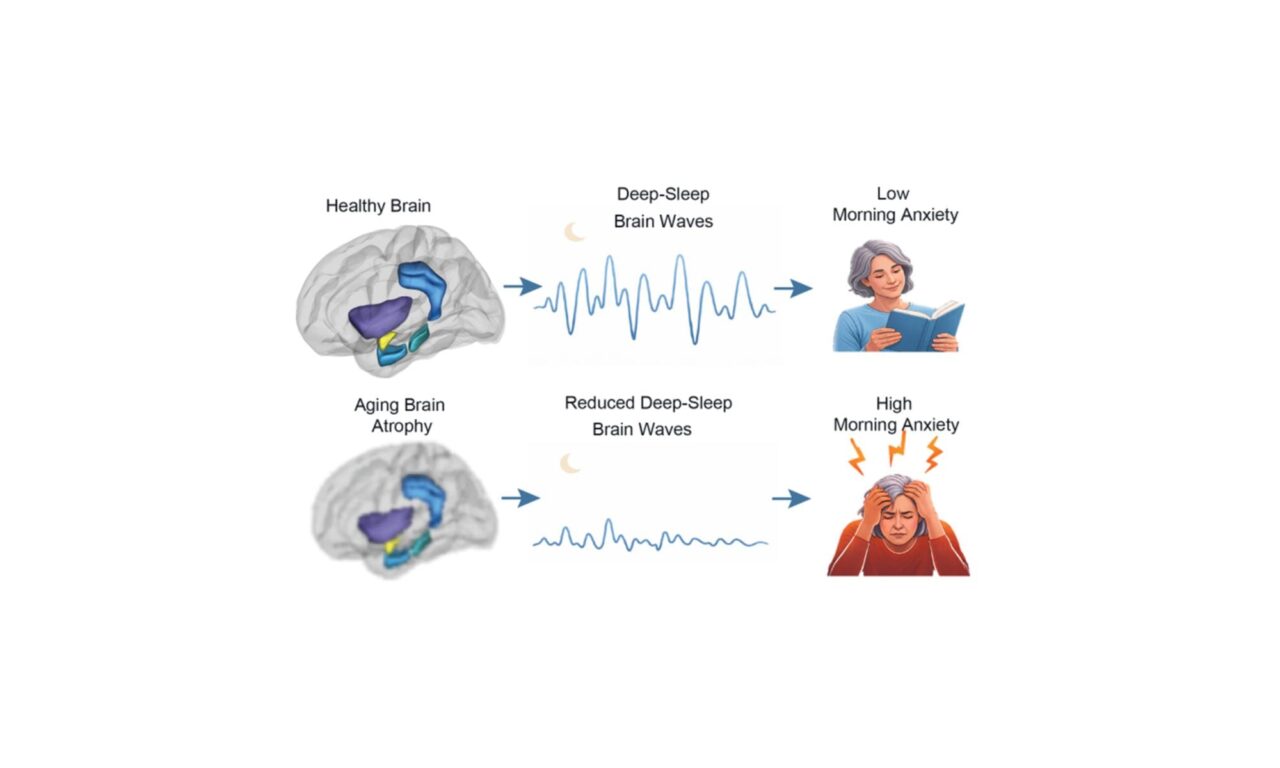
A new study reveals that declining slow-wave sleep impairs overnight emotional regulation, pointing to a modifiable target for late-life anxiety.

Researchers discovered that mind wandering is linked to a specific brain activity pattern that's frequently observed during sleep.







Arousal disorders—such as sexsomnia and sleep eating—are yet to have the comprehensive treatment guidelines that are available for other sleep disorders like sleep apnea and insomnia.
Read More
A new study found that sleep patterns, including dreaming, in pigeons are remarkably similar to those in mammals.
Read More
Researchers investigated how diet impacts sleep by having study participants consume two different diets—one healthier than the other—in a randomized order.
Read More
Sleep scientists describe how slow-wave sleep can act as a protective factor against memory decline in those with existing high amounts of Alzheimer’s disease pathology—a potentially significant advance that could help alleviate some of dementia’s most devastating outcomes.
Read More
Researchers found that spindle rate frequency increased following exposure to stressful images, providing compelling evidence that stress was a contributing factor in spindle-specific sleep rhythm changes.
Read More
Is there a connection between sleep and tinnitus? These researchers at the University of Oxford think so.
Read More
High amplitude mechanical brain pulsations during deep sleep accelerate the clearance of brain waste, researchers from the University of Oulu in Finland found.
Read MoreA study reports that we have a period of creativity in the semilucid state that occurs as we begin to drift into sleep (sleep phase N1).
Read More
A new study could help improve automated methods for detecting sleep spindles and for correlating them with cognitive function.
Read MoreThe impact of sleep disturbance on sharp wave ripples may provide a mechanistic link between poor sleep and high blood sugar levels seen in type 2 diabetes.
Read More
Vagal-evoked potentials were largest during a specific sleep stage called nonREM sleep, during which large, slow waves dominate the electrical activity of the brain.
Read More
Acivity of neocortex pyramidal cells before and during a spasm closely mirror slow oscillation waves that are common during NREM sleep, with a slight twist.
Read More
Brazilian and South African researchers analyzed dream reports word by word using graph theory, not a semantic analysis.
Read More
Researchers show a cortex-wide variation of cytosolic ATP levels in the cortical neurons depending on the sleep-wake states of animals.
Read More
Why does the mouse sleep five times longer than the elephant? Scientist have developed quantitative models to explain sleep time differences.
Read More