New survey data highlights what sleep lab supervisors value most in EEG equipment setups, alongside common troubleshooting challenges.
By Sree Roy
When outfitting a sleep center for clinical success, the reliability of equipment like EEG electrodes is paramount. According to a recent Sleep Review survey, sleep lab managers and directors are clear on what matters most when selecting EEG electrode leadwires: durability. Survey respondents were advised to select up to three characteristics that are most important, and every single one cited durability as a top priority. Length options also ranked highly, selected by 60% of professionals, perhaps to accommodate patient movement throughout the night. Other valued characteristics include reduced tangling, CT artifact reduction, and connector reliability, each noted by 30% of respondents.

This industry consensus on reliability extends directly to the application process. When asked about their preferred electrode paste for securing leads during sleep studies, there was unanimous agreement among participants, with 100% indicating they use Ten20 paste (over other answer options, including Elefix) most frequently to ensure the electrodes hold.

Navigating Electrode Challenges
However, sleep lab supervisors report regularly contending with signal disruptions.
When asked to select up to three from a list of 10, the most frequent culprits disrupting overnight sleep studies are electrodes detaching (60%) and wire tangling (50%). Excessive artifact (30%), poor adhesion (20%), and the morning cleanup burden (20%) can also pose operational challenges. On a positive note, 20% of respondents reported that none of the electrode-related issues from the list occur in their lab or only occur rarely.

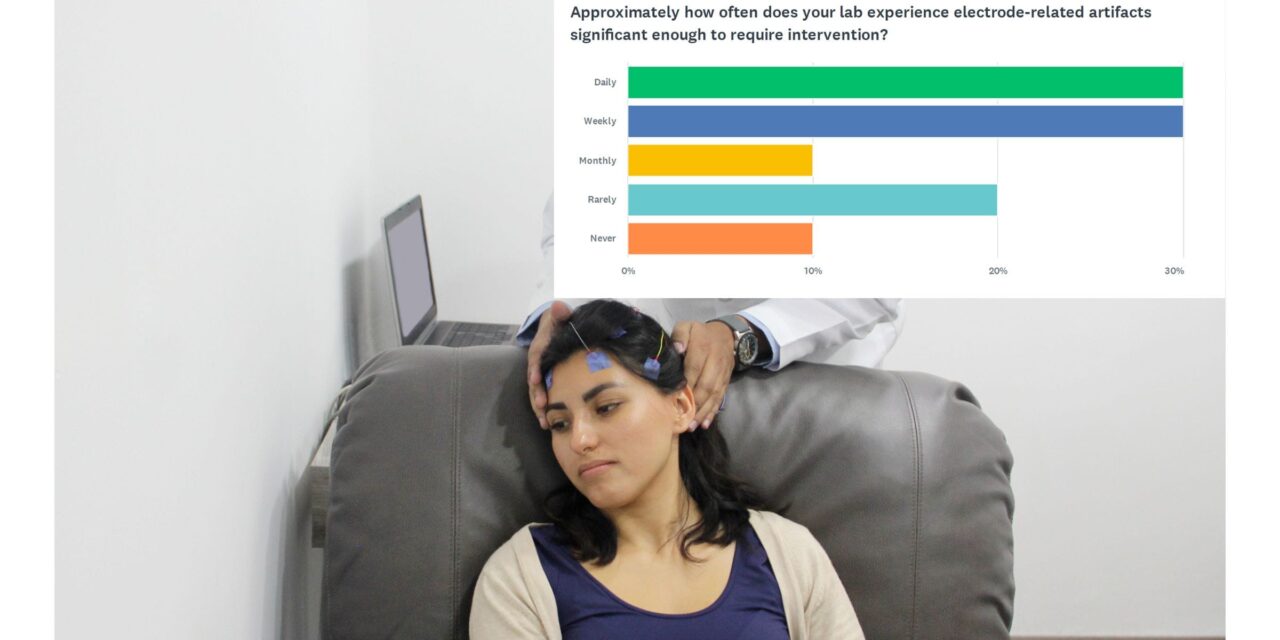
When asked specifically about the frequency of electrode-related artifacts significant enough to require intervention, the answers were mixed: 30% find this happens daily, 30% report weekly, 10% say monthly, while 30% say rarely or never.

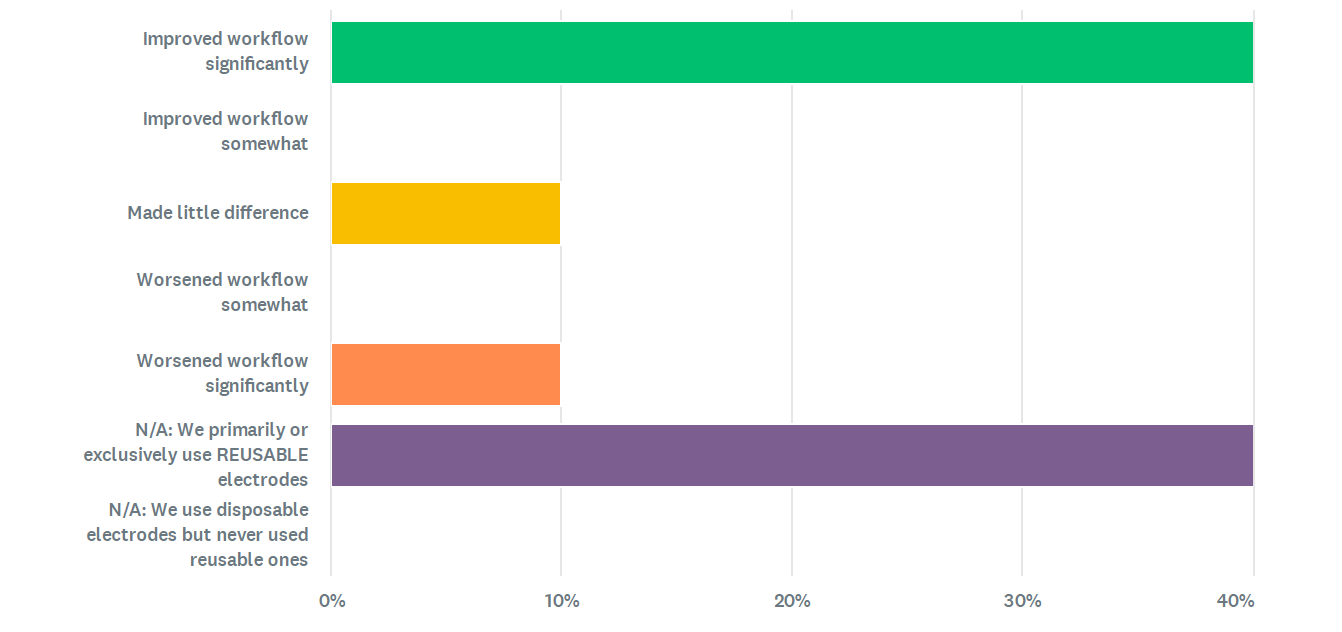
In part to mitigate morning cleanup, some labs have transitioned to single-use electrodes. For 40% of respondents, disposable electrodes have “improved workflow significantly” compared to reusable alternatives. Forty percent note that they still primarily or exclusively rely on reusable electrodes.
Emerging EEG Technologies
As the field of sleep medicine continues to evolve, sleep techs are looking toward innovative solutions to streamline setups, reduce artifact occurrences, and improve overall patient comfort. Wireless electrodes are currently generating the most interest, with 43% of surveyed labs evaluating, trialing, or interested in adopting the technology.
Hydrogel-based electrodes are also on the radar for 29% of supervisory professionals. Additionally, a segment of forward-thinking labs (14% each) are exploring dry electrodes, patch-style systems, pre-configured rapid-application arrays, and AI-assisted electrode placement systems. No one reported interest in in-ear EEG electrodes.
More in Electrodes:
ID 364526977 © Arlette Lopez | Dreamstime.com