
New research reveals that night-to-night variation in sleep apnea severity can lead to missed or incorrect diagnoses, suggesting a need for repeated measurements.
Key takeaways:
- A clinical trial comparing single-night lab tests to multi-night home monitoring found that one-night studies may misclassify a meaningful proportion of patients.
- Night-to-night variability in sleep apnea severity means current diagnostic approaches might under- or overestimate the condition in some individuals.
- Incorporating repeated measurements could provide a more reliable basis for diagnosis and help identify patients with higher cardiovascular risk.
A single night of sleep testing may not be sufficient to accurately diagnose obstructive sleep apnea (OSA), according to new research from Flinders University.
The study, published in npj Digital Medicine, challenges the long-standing reliance on one-night sleep studies. Researchers found that analyzing sleep over multiple nights provides a more accurate clinical picture, as night-to-night variation can lead to missed or incorrect diagnoses.
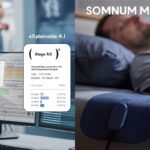
Researchers conducted a prospective clinical trial with approximately 100 adults referred for suspected sleep apnea. The study compared standard overnight polysomnography with repeated sleep measurements taken over several weeks in patients’ usual home environments using low-burden technologies.
“Our findings show that sleep apnea can vary considerably from one night to the next, so if you only measure it once, you may not capture the true severity of the condition,” says Bastien Lechat, PhD, lead author and sleep expert at FHMRI Sleep Health, in a release.
By comparing the two methods, researchers found that single-night testing misclassified a meaningful proportion of patients, particularly those whose sleep apnea fluctuates or who experience different sleep patterns in a laboratory setting. The study noted that patients classified differently between the two assessments often experienced poorer sleep during lab testing, suggesting the environment itself can influence results.
“These findings help explain why misdiagnosis occurs. It’s not just measurement error—it reflects real differences in how sleep apnea presents from night to night,” says Sutapa Mukherjee, PhD, professor in respiratory and sleep medicine at Flinders University and senior consultant at Southern Adelaide Local Health Network, in a release.
Beyond diagnostic accuracy, the findings could impact how clinicians manage treatment and assess risk. Previous research links high night-to-night variability in sleep apnea to increased cardiovascular risk, suggesting these patterns could help identify patients susceptible to complications. Incorporating multi-night data alongside traditional testing could provide a more reliable foundation for clinical decisions.
“For patients, this means a better chance of getting a diagnosis that truly reflects their condition and for clinicians, it opens the door to more informed and personalized care,” says Lechat in a release.
Related News for You:
ID 27934695 © David Carillet | Dreamstime.com