For years, the question was whether consumer sleep trackers were accurate enough. As evidenced by the Resmed-Oura partnership, today’s bigger question is whether they’re effective at getting patients into the sleep clinic.
By Sree Roy
The relationship between sleep medicine professionals and consumer sleep trackers has been fraught. Patients arrive at clinics armed with colorful apps and sleep scores, while sleep specialists often view these general wellness technologies skeptically, citing a lack of diagnostic-grade vetted accuracy and the potential for orthosomnia. However, a new partnership between Resmed and smart ring marketer Oura suggests that major industry players are moving past the accuracy question to focus on a different challenge also relevant to clinical sleep care: the many cases of undiagnosed obstructive sleep apnea (OSA) in the United States.
The collaboration, announced in May 2026, aims to connect Oura Ring’s nighttime breathing disturbance metrics with Resmed’s clinical education resources, as well as with independent virtual sleep care pathways. This could represent a significant shift in the top of the funnel. Rather than waiting for someone to self-report excessive daytime sleepiness during a fleeting primary care visit, the system is designed to prompt a user to seek professional help based on longitudinal data gathered in their own bed.
“We’re at an inflection point in how people engage with their sleep health, driven by rising awareness and more accessible technology,” says Carlos Nunez, MD, chief medical officer at Resmed. “By partnering with Oura, we are turning insight into action by guiding people across their sleep health journey and making it easier for them to seek clinical evaluation and care if they have concerns about their sleep.”
Value in Longitudinal Tracking
A primary hurdle for clinical adoption of wearable data has been the comparison to gold-standard in-lab polysomnography (PSG). While sleep physicians rely on the high-fidelity data of a single night in a lab, consumer devices offer a different value proposition: the ability to monitor trends over months or years.
Nunez argues that physicians should view wearable data less like a lab test and more like an extension of the history and physical exam. Nunez says. “The average US primary care physician spends eight to 10 minutes a year with their patients. We’re relying on the questions they can answer. Now they’re showing up with their wearable data to answer questions about their sleep, or their cardiovascular or metabolic health.”
Nunez points to recent Resmed research as evidence that consumer data has clinical relevance. An analysis of data from consumer wearables of more than 312,000 adults using CPAP therapy established global benchmarks for sleep duration, efficiency, and physiology.1 A second analysis of 117,000 adults with OSA found that higher sleep efficiency was consistently linked to longer sleep duration, greater physical activity, and a lower resting heart rate.2
“Even if wearable data is not diagnostic/clinical quality, the trends matter, and they matter because they influence the lives of our patients,” Nunez says.
Turning Insight Into Action
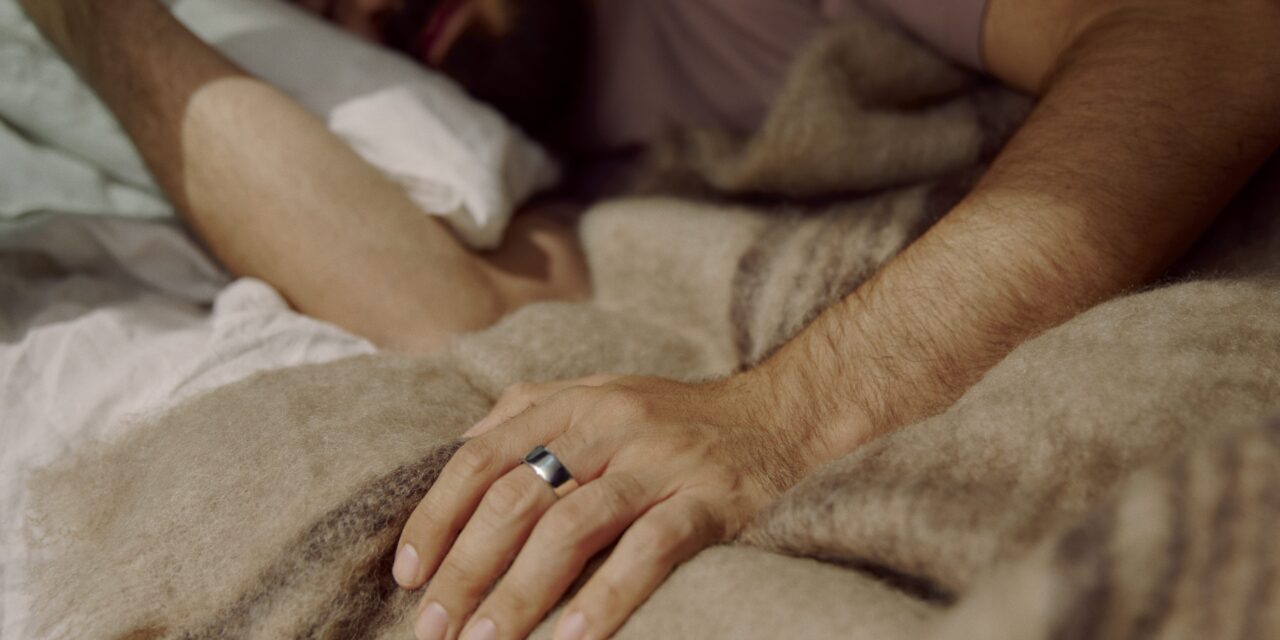
One reason for Resmed’s interest in Oura over wrist-based trackers is the form factor. Nunez notes that while many people remove their watch at bedtime, smart rings are more conducive to 24/7 wear.
The practical application of the partnership centers on Oura’s ability to detect breathing disturbances and oxygen variations. When an Oura member’s data crosses a threshold, the user is presented with a “tile” in their app. This tile leads them to Resmed-curated educational resources, the option to book an appointment with an independent sleep specialist, and a guide to support discussions with their healthcare provider.
Ricky Bloomfield, MD, chief medical officer at Oura, notes that Oura is responding to user behavior. “We know from many anecdotal reports…that our members really appreciate the insights that they get from the sleep metrics within Oura,” Bloomfield says. “When people see that they are not sleeping well and have a large number of breathing disturbances, that has motivated them to go seek out clinical care with their doctor. We wanted to make that whole process easier and more streamlined.”
The partnership does not aim to replace existing clinical care pathways from diagnosis to therapy and long-term management. Bloomfield emphasizes that Oura remains positioned in the “general wellness” space. Unlike some smartwatches that have achieved Food and Drug Administration (FDA) clearance for sleep apnea risk detection, Oura uses breathing disturbances as a proxy for potential risk.
“We want to make sure it stays firmly in the general wellness category,” Bloomfield says. “We are not making any explicit diagnosis in this situation.”
Navigating Within ‘General Wellness’
The lack of FDA clearance for sleep apnea detection in the Oura Ring is a point of contention for some clinicians and other device marketers. However, Resmed posits that wearables still offer relevant clues, FDA-cleared or not.
“FDA clearance for the screening of sleep apnea risk is an important milestone, and I wouldn’t be surprised if eventually every wearable company gets there,” Nunez says. “But for what we’re trying to do—raise awareness and educate people—the platform with Oura makes so much sense. It’s consistent data all night long and a pathway for the patient: ‘We’ve noticed this. This is what it means. Now you have the information to go talk to your doctor.'”
In support of its sleep metrics, Oura offers several peer-reviewed validation studies. A 2024 study found that the Oura Ring Gen3 demonstrated high accuracy compared to PSG, with over 95% sensitivity for sleep detection and no significant differences from PSG in estimating nightly durations of wake, light sleep, deep sleep, and REM sleep, whereas competing devices like the Fitbit Sense 2 and Apple Watch Series 8 showed significant over- or under-estimations in several sleep stages.3
Bloomfield adds that Oura’s strategy involves keeping options open while vetting clinical sleep partners. He points to Oura’s work with Essence Healthcare, a Medicare Advantage plan, as a parallel model. In that program, an AI assistant conducts STOP-Bang surveys with members who show high breathing disturbance indices, and the results are sent to members’ primary care physicians.
Directing Toward the Existing Ecosystem
Resmed is not looking to disintermediate existing clinical channels or durable medical equipment (DME) providers, according to Nunez. The partnership refers users to independent healthcare sleep care providers such as Ognomy Sleep, Arima Health, and Gem Health.
“Resmed’s not trying to build our own version of a sleep service where we’re doing all the tests,” Nunez says. “We’re trying to raise awareness and education. We’re pointing people in the direction of the ecosystem that’s already there. It’s not a way for Resmed to take over.”
For physicians who remain wary of consumer tech, he also offers a direct challenge: “If you are not wearing a wearable as a physician, buy one. Try it out. Your patients believe in this; the world believes in this. You need to understand what they believe in.”
Success Metrics
As the partnership rolls out, both companies will be watching the metrics to determine success. Early indicators include the rate at which breathing disturbances are detected and how many users follow through with clinical consultations.
“We don’t often track the results of therapy long-term,” Nunez says. “We track adherence for the first 90 days for reimbursement. But to be able to say, ‘Look, you were alerted, you are now on therapy, and now we can see how you behave the rest of the day,’ this is really important information.”
Bloomfield echoes this interest in the member journey. “Are members using the feature? Are they getting value? Ultimately, are they able to figure out a better path forward when it comes to their own sleep? Those are the things we’re looking at,” he says.
By establishing real-world benchmarks and creating a frictionless path from a wellness app to a specialist’s office, Resmed and Oura are betting that the future of the subspecialty lies in a connected health ecosystem. After all, in a patient’s journey, consumer wearables are not the final word, but they are increasingly the first one.
References
1. E Boers, C Woodford, A S Malik, et al. A30-07 Global characterization of sleep, physical activity, and physiology in adults with obstructive sleep apnea using real-world wearable data. Am J Resp Crit Car Med. 2026 May;212(suppl 1):aamag162.6293.
2. E Boers, C Woodford, A S Malik, et al. A30-08 Sleep efficiency as marker of health in obstructive sleep apnea: Insights from wearable data. Am J Resp Crit Car Med. 2026 May;212(suppl 1):aamag162.6294.
3. Robbins R, Weaver MD, Sullivan JP, et al. Accuracy of three commercial wearable devices for sleep tracking in healthy adults. Sensors (Basel). 2024 Oct 10;24(20):6532.