
At The Restful Sleep Place, Funke Afolabi-Brown, MD, FAASM, treats more than symptoms. She tackles biopsychosocial systems.
By Sree Roy
In 2023, Funke Afolabi-Brown, MD, FAASM, launched The Restful Sleep Place, a concierge sleep medicine practice designed to move beyond diagnosing sleep disorders and simply treating their symptoms. She also strives to see the whole person, the entire airway, the family system, and the root causes contributing to each patient’s poor sleep—root causes that have ranged from enlarged tonsils to nutritional deficiencies to trauma to family dynamics.
“Sleep is a very vulnerable and a very sensitive topic for most people,” Afolabi-Brown says. “To properly administer care in a way that I felt patients deserved, it needed time and a very high and personalized touch.”
Afolabi-Brown is triple-board-certified in pediatrics, pediatric pulmonology, and sleep medicine. This background allows her to treat the full lifespan, though her practice sees a heavy concentration of school-aged children and midlife women.
In October 2025, the Restful Sleep Place celebrated the grand opening of a new office for in-person patients in Horsham, Pa. Via telemedicine, Afolabi-Brown also sees patients in New Jersey and California.
The Case for Concierge Sleep Medicine
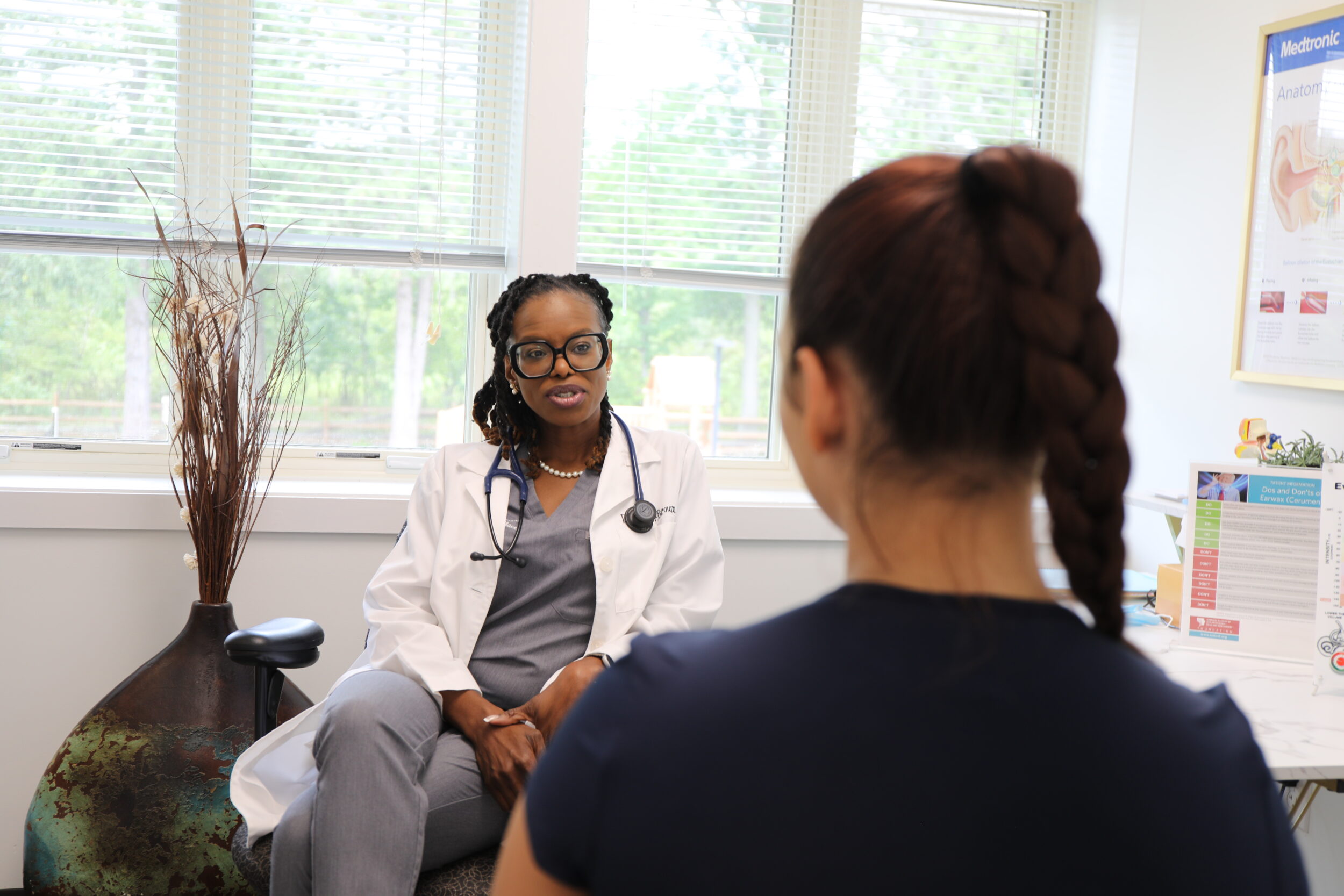
The concierge model allows Afolabi-Brown to surpass the 15-minute window that often characterizes modern specialty care. At The Restful Sleep Place, an initial evaluation typically lasts an hour.
The model provides patients with unlimited access to their physician and a clear trajectory for their care. Another patient benefit is Afolabi-Brown’s ability to perform extensive care coordination on the back end. Many of her patients arrive after seeing multiple specialists—otolaryngologists, psychologists, and primary care providers—often feeling that their care is fragmented.
“I wanted a practice where people could come and didn’t feel like they were passed around. They leave with a whole blueprint as to what the cause of their sleep issues potentially could be, as well as what the next steps were—all without feeling rushed, ” Afolabi-Brown says. “I look at that holistically, from a biology systems standpoint, but also from social, environmental, and family standpoints.”
This coordination is particularly vital for pediatric patients navigating the school system. Afolabi-Brown recalls a teenager with delayed sleep phase disorder. The student was missing first-period classes, developing anxiety over falling behind, and facing disciplinary action for truancy.
To address the root issue, Afolabi-Brown did more than prescribe chronotherapy. She initiated a meeting with the school, wrote letters, and established a plan for accommodations. “I needed to make sure the school was on board… to ensure that she still was able to get access to everything she needed to thrive,” she says. “When I tell a patient, ‘I spoke with your therapist, I spoke with your school counselor,’ they get better just hearing that. They feel like finally, somebody has heard them.”
Addressing the Pediatric Diagnostic Gap
A significant portion of Afolabi-Brown’s work focuses on identifying obstructive sleep apnea (OSA) in children.
“These children are being mislabeled as having allergies or something else,” Afolabi-Brown says. “Or they get a sleep study where they just were not able to sleep throughout the night, and so they get misdiagnosed.”
The journey to a diagnosis is often fraught with logistical hurdles. In many regions, wait times for an in-lab pediatric sleep study range from six to 12 months. For families of children with neurodiverse conditions, such as autism, the traditional lab environment is often untenable.
To bridge this gap, Afolabi-Brown leverages home sleep testing (HST) in limited situations. While acknowledging that HST is not the gold standard for pediatrics, she views it as a necessary tool when the alternative is no data at all.
“If you are in a bind where the choice is between getting nothing done and getting some data that would hopefully move the needle forward, I would absolutely do it,” she says. She utilizes technologies cleared for children, such as the SleepImage software and ring.
Afolabi-Brown is transparent with families that HSTs for children are often an out-of-pocket expense. However, many families find the cost preferable to a 12-month wait or a failed in-lab study.
Holistic Sleep Care
With both pediatric and adult patients, Afolabi-Brown’s holistic approach extends to lifestyle and environmental factors that are often sidelined in traditional sleep clinics. This includes a deep dive into nutrition, micronutrient levels, and family dynamics.
“We are what we eat, so I focus a lot on nutrition and how to optimize nutrition for sleep,” she says. In some cases, she orders lab work to check for depletions in Vitamin D or other micronutrients that can contribute to sleep fragmentation.
She also considers the “system” of the family. When treating a child, she often addresses the sleep health of the parents and siblings as well. “I’m not just trying to fix one child’s sleep problem. I’m trying to fix the sleep problem for the entire family,” she says.
This comprehensive view requires a shift in mindset. Afolabi-Brown encourages her colleagues to “think outside the box” and remain open to alternative solutions that reduce the burden on families.
Grand Opening

The grand opening of The Restful Sleep Place’s Horsham office in October 2025 was designed to provide education, facilitate professional networking, and, of course, be a fun celebration. The evening featured food, games, patient education, and a formal ribbon cutting with the local Chamber of Commerce, marking the practice’s transition into its own dedicated in-person space.
The event also reflected the interdisciplinary philosophy at the core of Afolabi-Brown’s work. Attendees included dentists, psychiatrists, psychologists, otolaryngologists, pediatricians, and internists—some long-standing referral partners and others who were newly introduced to the scope of her practice. For many clinicians in attendance, the event served as their first in-depth look at how Afolabi-Brown approaches sleep care and care coordination.
Friends, family members, neighbors, and former medical school classmates were also present. “Seeing everybody coming together was a huge highlight,” Afolabi-Brown says. One durable medical equipment provider that works closely with the practice offered hands-on education about sleep apnea therapy, including showcasing CPAP devices—an experience that was novel for many guests who had never seen the equipment up close.
Beyond celebration, the event functioned as an outreach and partnership-building opportunity. New professional relationships emerged as a result of the practice’s marketing push, which included email outreach, phone calls to referring practices, printed flyers, faxed invitations, and social media videos designed to build anticipation. Afolabi-Brown also relied on direct, personal communication with referral partners, reinforcing the relational approach that underpins her practice. “People wanted to come and celebrate that milestone,” she says.
The Interdisciplinary Network

One of her key collaborators is Bari Levine, DMD, MPH, owner of Growing Smiles Main Line Pediatric Dentistry. Levine routinely screens her dental patients for sleep-disordered breathing using the Pediatric Sleep Questionnaire and clinical evaluations of oral anatomy.
When Levine identifies these markers, she refers families to Afolabi-Brown for a comprehensive assessment. “From our first in-person meeting, it was clear that we shared similar values around patient-centered, compassionate, evidence-based care. That initial connection quickly grew into a trusted professional collaboration and a meaningful friendship,” Levine says.
The relationship is reciprocal; Afolabi-Brown often refers patients to Levine and other airway-focused dentists to address the structural drivers of sleep issues.
“I especially appreciate her communication,” Levine says of Afolabi-Brown. “For every patient I refer, she provides a detailed summary of the visit, the clinical assessment, and clear next steps. That level of follow-through strengthens continuity of care.”
Advice for the Field

While Afolabi-Brown recognizes most US sleep physicians practice within the constraints of an insurance-based model, she believes elements of a holistic concierge approach are scalable. She suggests that even in a 15-minute encounter, a physician can make a patient feel seen and heard through small, intentional changes.
“You sit with your patients, you sit at their level, you move your computer away so that you’re not spending the entire time clicking away at your keyboard,” she suggests. “Even those little pieces. It’s almost as if time freezes.”
She also recommends delegating certain holistic components—such as habit tracking or nutritional guidance—to other team members if the physician’s time is strictly limited.
As the founder of The Restful Sleep Place and the author of the book Beyond Tired, Afolabi-Brown has become a prominent voice for sleep health in the Philadelphia region and beyond. But her mission remains rooted in the individual patient-physician connection.
She says, “One thing that has worked for me is putting myself in the shoes of the patient, pausing and saying, ‘If this were me, how would I like to be seen?'”
Photography by Danelle Karlson Photography