A recent survey reveals what sleep techs, RTs, and lab managers value most in positive airway pressure interfaces.
By Sree Roy
For sleep techs, respiratory therapists, and sleep lab managers in Sleep Review’s audience, the results are clear: the most valued quality of CPAP masks is their ability to seal well.
The importance of a solid seal arose several times in our latest Peer Pulse survey, which investigated trends in CPAP masks. When asked to select up to three mask features that have had the greatest positive impact, 57% of respondents pointed to better sealing technologies, making it the top choice. Other highly valued advancements include quieter venting (50%), headgear utilizing fabric instead of, or in addition to, plastic (46%), and tube-at-the-top designs (44%).
That lines up with responses to a question about which patient population remains the hardest to fit. Patients with facial hair were identified as the most challenging (41%), with high-pressure users and patients with craniofacial differences tied for a distant second (15%).
Also, when asked about innovations they’d most like to see (selecting up to three from a list), the top spot went to “better solutions for facial hair” (78%). Other desires are for improved skin-friendly materials (51%), custom-fit 3D-print masks (39%), and better leak detection (33%).
Navigating Magnetic Mask Warnings
Recent safety warnings regarding magnets in CPAP masks have prompted shifts in prescribing habits, though the overall impact appears muted.
According to the survey, the warnings have not universally deterred usage. While 43% of respondents now recommend magnetic masks less often and 14% have completely stopped recommending them, another 43% reported no meaningful change in how often they recommend masks with this feature.
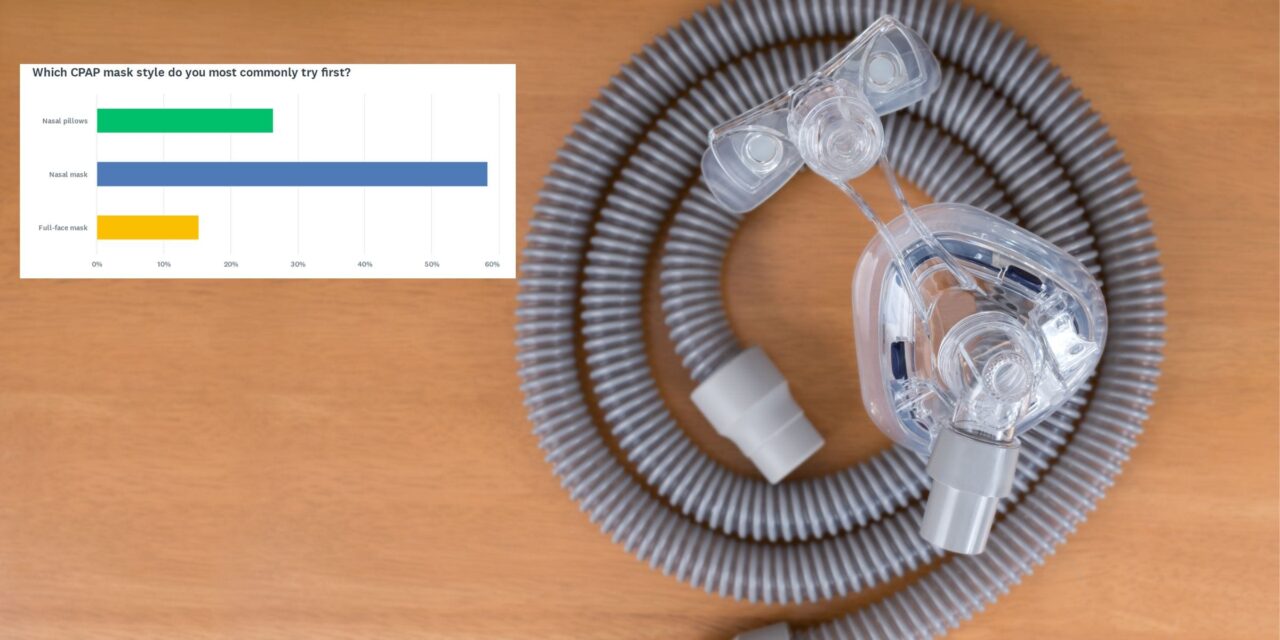
In general, when initiating therapy, clinicians in our audience report reaching for a nasal mask first (58%), followed by nasal pillows (26%) and full-face masks (15%).
Minimal Virtual Fitting Tool Usage
Despite the broader healthcare industry’s push toward digital health solutions, artificial intelligence (AI) and virtual mask fitting tools have yet to gain significant traction in sleep medicine, according to our survey.
A majority of respondents (58%) report they have not used virtual mask fitting tools at all. Among those who have, 21% observed no difference in patient outcomes, and only 18% felt they improved outcomes “somewhat.” A mere 3% said the tools improved outcomes significantly.
What’s more, there is little appetite for future development in this area. Only 13% of respondents expressed interest in seeing manufacturers develop AI-assisted fitting tools, indicating that clinicians prefer that manufacturers focus on physical improvements to the masks themselves.
DME Recommendations Critical
While patients occasionally do their own research, they rely heavily on professional guidance for CPAP mask selection. Only 11% of sleep clinicians report that patients “frequently” request specific masks they might have heard about on a sleep apnea forum or online community. More respondents indicated that patients only “occasionally” (53%), “rarely” (32%), or “never” (4%) request particular masks.
The best strategy may be to maintain a referral list of responsive, high-quality durable medical equipment (DME) providers to give to patients. As one survey respondent wrote, “Mask choices are an ongoing issue throughout the life of the OSA patient. We try our best to pinpoint the right mask for the patient at the time of titration. However, the role of the DME rep has a greater influence with regard to ongoing mask determinations.”
Ultimately, hands-on support and physical trial opportunities remain paramount for long-term adherence. As another survey respondent noted, “More options with DME fittings would benefit patients in a profound way.”