The shift to home sleep testing is forcing a rethink of how respiratory effort is captured, validated, and clinically applied.
By Sree Roy
Respiratory inductive plethysmography (RIP) belts have long been a cornerstone of in-lab polysomnography, providing a measure of respiratory effort by capturing the expansion and contraction of the chest and abdominal walls and guiding clinicians on whether a breathing event is obstructive or central. But, as sleep studies have shifted toward the home, the capture and utility of respiratory effort data is also changing.
While many home sleep testing (HST) manufacturers have simplified their device setups by including only one RIP belt, others are doubling down on two-sensor technology, in some cases by reimagining its physical form; in others, by extracting more insights from the breathing mechanics it captures.
“Breathing during sleep is not just about whether airflow is present or absent,” says Sveinbjorn Hoskuldsson, chief technology officer at Nox Medical. “It is also about whether the patient is making an effort to breathe, how the chest and abdomen are moving, and how those patterns change during events.”
As the field moves toward more individualized care, the data derived from RIP is being leveraged for everything from sleep staging and arousal detection to the physiological phenotyping of obstructive sleep apnea (OSA).
The Case That Two Is Better Than One
For Nox Medical, maintaining a two-belt HST system was a deliberate decision. “Measuring both thoracic and abdominal movement gives a fuller picture of respiratory mechanics than measuring only one compartment,” Hoskuldsson says. “The choice to use two belts is not about adding signals; it’s about preserving the physiology that matters: respiratory effort, thoracoabdominal coordination, and breathing mechanics. This becomes particularly important in home testing, where maintaining diagnostic confidence can be challenging.”
Redundancy, he adds, becomes particularly critical if other signals fail. Nasal pressure signals, for instance, can degrade with mouth breathing, leaving the thoracic and abdominal motion as the primary indicators of whether a patient is attempting to breathe.
Amir Reuveny, PhD, CEO of Wesper, agrees that the dual-sensor approach provides critical information. “Many times in sleep medicine, people compromise on this, choosing only one because it’s ‘good enough,’” Reuveny says.
New Form Factors
Of course, the belts can present challenges, particularly in unattended environments. They must be tight enough to capture a signal but loose enough for comfort, and they can shift or roll up during the night. Some HST makers are addressing these challenges by inventing new form factors.
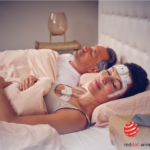
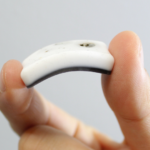
Wesper, for one, has replaced RIP belts with adhesive patches. The wireless, palm-sized, crescent-shaped sensors adhere under the breast and over the belly button. “There is no tuning; there is no tension you need to do,” Reuveny says. “It’s small and light and doesn’t feel claustrophobic.”
In a personal trial of the Wesper system, I found the application to be straightforward: download the Wesper app, then simply peel and stick each sensor (I also slid a pulse oximeter onto my wrist). The two respiratory effort sensors remained securely in place throughout the night, and I experienced no discomfort or skin irritation during wear or removal.
Uniquely, Wesper leverages RIP-Sum and RIP-Flow signals to create its US Food and Drug Administration (FDA)-cleared airflow channel—one that does not need a nasal cannula.1 “Having an airflow channel…without anything on the face is critical for the success of the test and the comfort of the patient,” Reuveny says.
According to FDA 510(k) K203343, a bench test comparing Wesper’s respiratory effort patches with a predicate’s RIP technology over a range of breath frequencies and amplitudes, as well as perturbations (such as body mass index and body hair), showed the Wesper HST met or exceeded the performance of the nasal cannula-utilizing predicate device in detecting clinically significant breathing events.1
Huxley Medical has taken a different dual-sensor approach with its SANSA device, a single-point-of-contact chest-worn monitor that also eliminates belts. Instead of measuring chest wall expansion via an inductive loop, SANSA uses an accelerometer-based effort metric and a photoplethysmogram effort channel.
“RIP belts look at the chest wall expand and contract. Our accelerometer-based effort metric looks at the same thing; it’s just looking at the acceleration of the chest wall. In addition, we directly measure respiratory effort by capturing respiratory-induced pulse wave modulation, the rhythmic changes in blood volume that occur during the ventilatory cycle,” says Brennan Torstrick, PhD, chief scientific officer at Huxley Medical. Brett Klosterhoff, chief business officer at Huxley Medical, adds that this dual-sensor single-point-of-contact design is intended to be less failure-prone than straps that can fall off or roll up, particularly in specific populations such as obese patients or pregnant women.
A study presented at SLEEP 2025 demonstrated high performance in identifying central sleep apnea this way. Compared to in-lab PSG, the SANSA device showed 100% sensitivity and 98.9% specificity for detecting a central apnea index of 15 or more (and 80% sensitivity and 98.9% specificity for detecting a central apnea index of ≥10 events).2
Better Belts
For companies that prefer the established belt form factor, reliable mechanical and electrical stability is an engineering focus.
The impact of belt design on signal quality was highlighted in a study conducted by Nox Medical, which found that disposable RIP belts with integrated contacts that did not fold on top of themselves performed the best of typical styles. In contrast, cut-to-fit belts were more likely to be unreliable, and semi-disposable folding belts produced the lowest-quality RIP flow signals compared to cannula flow.3
“If a belt folds, shifts, stretches inconsistently, or has variable contact quality, the recorded signal becomes less accurate. That is why belt design matters so much,” Hoskuldsson says. “From a clinical perspective, this underscores that the quality of the respiratory signal depends not only on the algorithm, but also on the integrity and consistency of the hardware collecting the data.”
Nate Craft, vice president of sales and marketing at General Sleep Corporation, notes that its reusable RIP belt is designed to eliminate the need for cut-to-fit designs, which can introduce signal loss through secondary connectors.
“Our design eliminates that step: the belt snaps directly onto either side of the recording unit and connects through two simple snap leads, helping support a more consistent respiratory effort signal,” Craft says. He views RIP belts as a vital secondary signal that provides “redundancy reflecting standard in-lab sleep testing practice.”
New Utility
One of the most significant expansions of RIP technology is its use in inferring sleep stages and arousals without the need for EEG. This approach relies on the physiological principle that sleep state strongly influences ventilatory control.
Nox Medical has commercialized this through its BodySleep functionality. “As people move between wake, NREM, REM, and brief arousals, their breathing changes in recognizable ways,” Hoskuldsson says. “Respiratory rate, breath-to-breath variability, pattern regularity, respiratory effort, upper airway behavior, and body movement all shift with sleep state.”
This capability is particularly relevant for diagnosing populations that may not show significant oxygen desaturations during respiratory events, such as many women. By analyzing breathing patterns, clinicians can identify events associated with cortical arousals that might be missed by other HSTs.
Nox BodySleep is cleared as part of the DeepResp medical device. DeepResp is FDA-cleared to infer sleep staging with arousals with EEG and in the absence of EEG, with outputs reviewed by a medical professional. The FDA 510(k) summary provides validation for this use of RIP belts.4 Supporting peer-reviewed validation is provided by a 2025 paper published in Sleep and Breathing on RIP-based inference of sleep states and arousals,5 with earlier supporting FDA-cleared validation in K241960.6
Nox also markets a home testing system with EEG, but, as Hoskuldsson explains, “the benefit of Nox BodySleep extends beyond convenience, as a lower-burden setup can preserve access to clinically relevant physiological information on sleep fragmentation and respiratory disturbance when full EEG is not the preferred modality.”
Phenotyping OSA
Using RIP for phenotyping OSA “is one of the most promising directions in the field,” according to Nox’s Hoskuldsson.
“Patients can have the same AHI for very different physiological reasons,” he says. “One patient may have more severe upper airway collapsibility. Another may have a lower arousal threshold. Another may have different ventilatory control instability or body position dependence.”
Calibrated dual RIP can estimate ventilation changes, event depth, and ventilatory burden against reference airflow measurements.7
Longitudinal Monitoring with RIP
Currently, the best-established role of respiratory effort data is at diagnosis. But in the future, clinicians may also routinely use it to follow how sleep disorders change with therapy.
“The respiratory effort measurements we provide allow physicians to monitor central apnea over time. It can be either therapy-induced or emergent,” Wesper’s Reuveny says.
Nox’s Hoskuldsson adds, “If a therapy changes upper airway behavior, respiratory effort patterns, ventilation stability, or event characteristics, those changes can in principle be tracked over time through the respiratory signal.”
Whether through belts, patches, and/or algorithms, the future of RIP will be defined by its ability to maintain physiologic truth outside the lab.
References
1. US Food & Drug Administration. Re: K203343. 2021 Dec 21. Available at https://www.accessdata.fda.gov/cdrh_docs/pdf20/K203343.pdf
2. Khayat R, Dupuy-McCauley K, Molavi B, et al. Detecting central sleep apnea using a multi-diagnostic chest-worn monitor. Sleep. 2025;48(suppl1):A185.
3. Montazeri K, Jonsson SA, Agustsson JS, et al. The design of RIP belts impacts the reliability and quality of the measured respiratory signals. Sleep Breath. 2021 Sep;25(3):1535-41.
4. US Food & Drug Administration. Re: K252330. 2025 Nov 17. Available at https://www.accessdata.fda.gov/cdrh_docs/pdf25/K252330.pdf
5. Finnsson E, Erlingsson E, Hlynsson HD, et al. Detecting arousals and sleep from respiratory inductance plethysmography. Sleep Breath. 2025 Apr 11;29(2):155.
6. US Food & Drug Administration. Re: K241960. 2025 Mar 14. Available at https://www.accessdata.fda.gov/cdrh_docs/pdf24/K241960.pdf.
7. Finnsson E, Arnardottir E, Montazeri K, et al. Respiratory inductance plethysmography to quantify changes in ventilation in obstructive sleep apnea. IEEE Trans Biomed Eng. 2026 May;73(5):1943-52.