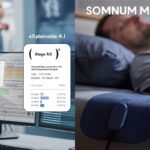

The latest version of the SOMNUM software analyzes polysomnography data to automatically detect and differentiate obstructive, central, and mixed sleep apnea.
Key takeaways:
- FDA 510(k) clearance (K253390) validates AI-based classification of OSA, CSA, and MSA.
- Subtype-specific respiratory event analysis improves diagnostic precision and supports next-generation digital biomarker development.
- Advanced AI analysis uses multi-channel physiological signals, with additional FDA 510(k) clearances planned for future releases.
The US Food and Drug Administration (FDA) has granted 510(k) clearance to HoneyNaps for SOMNUM V3.0, an artificial intelligence (AI) diagnosis software designed for polysomnography (PSG) analysis.
SOMNUM is clinical decision support software that assists medical professionals in analyzing PSG data, including sleep staging and respiratory event detection. The company previously received clearance for SOMNUM V1.1.2, and this latest clearance expands the software’s capabilities for the automated analysis of sleep-disordered breathing.
SOMNUM V3.0 automatically detects apnea and hypopnea events and classifies apnea into obstructive sleep apnea (OSA), central sleep apnea (CSA), and mixed sleep apnea (MSA) using AI algorithms. By analyzing subtle physiological patterns from multi-channel biosignals, the software is designed to distinguish different apnea subtypes that may be challenging to differentiate through manual scoring alone. Compared with conventional approaches that primarily assess sleep-disordered breathing using composite indices, the software provides event-level classification intended to support more detailed clinical scoring.
According to validation results submitted for the clearance process, the algorithms achieved an overall percent agreement of more than 97% across respiratory event categories. HoneyNaps notes this capability may support a more accurate assessment of sleep-disordered breathing severity and assist clinicians in treatment planning.
“The FDA 510(k) clearance for SOMNUM V3.0 represents regulatory validation of our AI algorithm’s clinical performance in automatically detecting and differentiating OSA, CSA, and MSA. We remain focused on advancing AI-driven sleep diagnostics through continued innovation in automated analysis and next-generation digital biomarkers,” says Sean Ha, president of HoneyNaps USA, in a release.
The company is also developing next-generation AI technologies and digital biomarkers, including hypoxic burden, arousal burden, and ventilatory burden, to enable a broader evaluation of disease severity and health risks associated with sleep apnea. HoneyNaps plans to pursue additional FDA clearances for future SOMNUM versions incorporating these capabilities.