Sponsored Content
The crowdfunding launch of the Sleepal AI Lamp in May 2026 arrives at an important moment for contactless sleep monitoring. The conversation in sleep technology is quietly evolving. Instead of wondering if radar can monitor sleep, the discussion is now focused on the larger challenge: how well can it be reliably validated in clinical environments?

Unlike many consumer sleep tracker devices launched over the last decade that were evaluated with limited or nonexistent validation, Sleepal is launching with a dataset that deserves serious attention from the sleep community: a 1,022-night validation study plus over 2,000 total nights of simultaneous polysomnography (PSG) and millimeter-wave radar monitoring collected in multiple hospital sleep laboratories. The validation preprint is now available on arXiv (2604.16442). The sheer number of nights alone provides a benchmark for the industry, where the vast majority of products are based upon far smaller groups of participants.
For sleep physicians and researchers, the critical question is not whether this product successfully launches in the commercial market. The concern is what the methods used to validate this product represent in terms of the expectations for contactless technologies moving toward becoming a viable clinical tool.
A Validation Approach Built for Real-World Complexity
This study was conducted with the practicalities of hospitals in mind. Dian Fan—founder of XSmart; former leader of an IoT platform at a Fortune 500 smart home company—led Sleepal’s development team and partnered with several hospital sleep labs (the names of which were withheld based on research protocol) to develop what is claimed as one of the most extensive collections of radar-based sleep data to date. This study differed from many others in that while most studies are limited to enrolling healthy adults, this study enrolled a population of people who have varying degrees of complex sleep disorders, including mild-moderate OSA, PLMD, and fragmented sleep architecture. The method specifically addressed a major shortcoming in validating consumer sleep tracking devices: algorithms created with only data collected from healthy individuals’ sleep patterns often fail miserably when tested against the wide array of sleep disturbances found in clinical settings.
The preprint, now available on arXiv, reports key research metrics including epoch-by-epoch agreement with PSG-scored sleep stage, sensitivity and specificity measures for arousals, and sleep-wake discrimination ability, especially how these performance measures vary among healthy vs. disordered sleeping participants.Findings from Sleepal’s summary data are encouraging: 92.77% correct assignment of sleep-wake states, and 77.2% correct identification of four sleep stages, with notably stable performance even among participants experiencing disrupted breathing. Even among patients with severe obstructive sleep apnea (AHI > 30), the model maintained 74.3% accuracy. All performance measures were determined simultaneously with PSG in hospital settings, indicating that these data reflect clinically relevant conditions rather than represent idealized laboratory conditions.

Millimeter-Wave Radar: Measuring the Body, Not the Wrist
Accelerometers record movement patterns of limbs. Photoplethysmography records pulses captured through light reflected off the wrist. Both offer indirect indicators of sleep state. However, there are fundamental differences between radar-based measurement and both types of wearable technology.
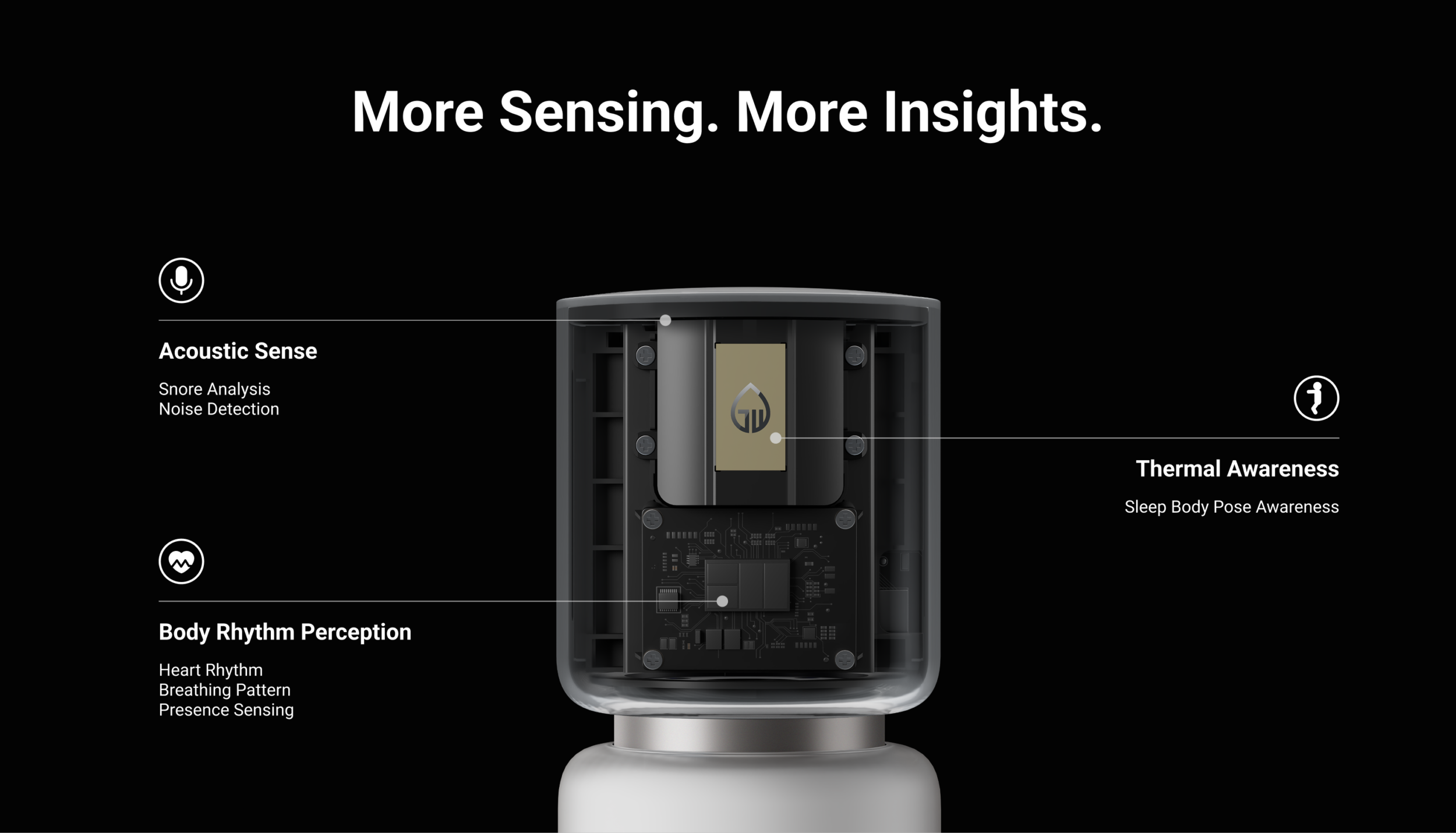
In comparison, Sleepal AI Lamp’s 60 GHz millimeter-wave radar detects submillimeter chest wall displacements resulting from cardiac contraction and respiration-induced thoracic recoils (the cardioballistic phenomenon extensively researched in mid-20th century ballistocardiography studies), enabled by modern digital beam forming and machine learning techniques, overcoming previous limitations related to motion sensitivity and size constraints associated with prior implementations.
In addition to radar detection, Sleepal uses thermal array sensing (a heat signature detection system – not optical imaging) to determine location and postures. As such, this multi-modality allows Sleepal to identify posture (i.e., supine, lateral, prone) along with cardiorespiratory measurements that cannot be identified by wrist-worn devices by their very design.
Environmental Sensing: Beyond Wearables
Physiological monitoring has received most of the clinicians’ attention when considering bedside (contactless) systems; however, there is one aspect that should receive much greater attention: environmental monitoring. The Sleepal AI Lamp collects data about environmental variables, which can include temperature, humidity, light levels, and acoustics, which are often missing from wrist-based wearable devices. These variables have been shown to significantly impact both the quantity and quality of sleep.
As professionals in the field of sleep medicine, we regularly advise our patients about “sleep hygiene”, including keeping bedrooms at optimal temperatures (between 15 and 20°C), minimizing light levels in sleeping environments, reducing ambient noise during sleep periods. However, to date, assessing whether or how well patients adhere to this type of advice largely depends upon self-reporting by the patient. As the literature demonstrates time and again, such self-reporting is rarely reliable.
The objective collection and correlation of environmental data with sleep fragmentation patterns could convert generalized sleep hygiene recommendations into focused behavioral interventions. For example, a patient reporting sleep maintenance insomnia may discover that the temperature in the bedroom rises 3 to 4°C after midnight due to inadequate ventilation, correlating with documented awakenings. That is actionable information which doesn’t require physician interpretation. And that action is completely invisible to the wrist-worn device collecting physiological data that views the body as an independent system; not aware of the physical environment in which the body is actually sleeping.
While environmental sensing will never be able to replace polysomnography, for those patients whose sleep disorders stem from either behavioral issues or environmental factors rather than primary pathology, it could provide a unique value-added benefit: a clear and identifiable evidence base showing why last nights’ sleep was less successful than previous nights’.
Passive Sleep Position Monitoring
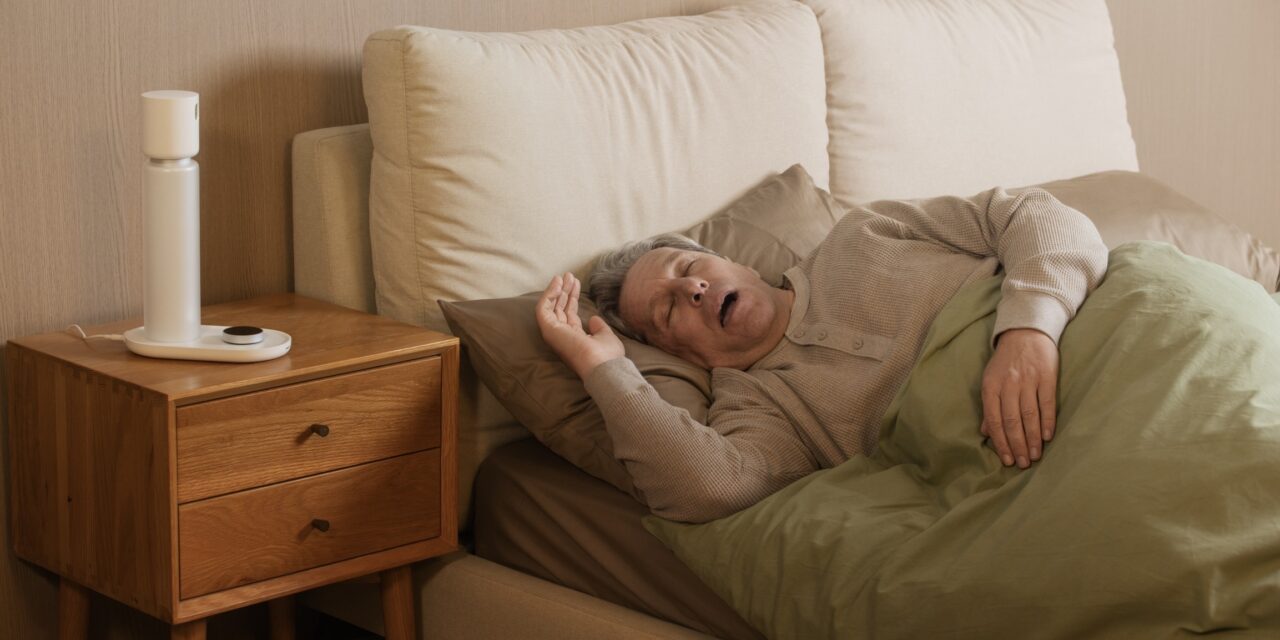
The thermal array of the device allows passive sleep position tracking. This ability to monitor sleep position can be highly relevant to patients with positional sleep dynamics. Research suggests approximately 25% to 30% of the population experiences some degree of dependency in terms of sleep quality being affected by their sleep positions. For those cases where positional therapy (e.g., encouraging non-supine sleeping through numerous methods) is successful, patient adherence has historically required either cumbersome wearable devices or laborious video analysis.
A contactless system such as Sleepal that can track nightly supine percentages could greatly improve positional behaviors monitoring for patients without having them wear additional devices. Although Sleepal is clearly identified as a consumer wellness product and not a medical device, this technological capability could still serve as supporting documentation for evidence-based discussion between patients and clinicians.
Wellness vs. Clinical Data: Where the Line Blurs
Sleepal has clearly placed the product into the consumer wellness category, not a medical device. As such, they also stated the product is not FDA cleared for use in making a diagnosis or detecting any diseases. The product is designed to “help you learn your sleep patterns and create better sleeping habits”.
However, if the validation data shows agreement between epoch-by-epoch readings of Sleepal and PSG at levels similar to those of type III home sleep apnea testing devices, the line between “wellness monitoring” and “clinically relevant data” becomes hard to draw.
Physicians already navigate the same complexities with patients who monitor themselves with wearable technology. For example, the Apple Watch’s irregular rhythm alerting feature has identified atrial fibrillation in many individuals who then received medical attention for a condition which was never intended to be diagnosed or cleared by regulatory agencies, but was clinically significant.
If a non-contact system can demonstrate the same level of accuracy as one that is regulated as a diagnostic device while being marketed solely as a wellness tool, should clinicians consider the information from this system clinically relevant? This question is no longer hypothetical.
Practical Implications for Sleep Medicine Practice
For sleep technologists and physicians, the immediate question is not whether to recommend Sleepal specifically, but how to evaluate contactless monitoring tools patients will increasingly bring into the bedroom.
The validation approach Sleepal employed — large sample size, heterogeneous patient population, simultaneous PSG comparison, and public preprint disclosure — sets a benchmark that other manufacturers should be held to. Sleep medicine professionals can use this as a reference point when patients ask about radar-based sleep trackers, or when other devices enter the market with far less rigorous backing.
Several practical considerations emerge:
For patient counseling: Patients who cannot tolerate wearables — whether due to skin sensitivity, claustrophobia, or compliance issues — may ask about contactless alternatives. The Sleepal dataset provides a basis for discussing what such devices can and cannot do. They can track sleep-wake patterns and environmental correlates with reasonable accuracy. They cannot diagnose sleep apnea, periodic limb movements, or other disorders requiring physiological channel confirmation.
For the sleep laboratory: Contactless devices that track sleep position may serve as adjunctive tools for positional therapy follow-up, reducing reliance on patient self-report or repeated video review. However, any data from consumer-grade devices should be interpreted cautiously and never substitute for in-lab or home sleep testing when clinical decisions depend on it.
For the field: The AASM’s cautionary stance on consumer sleep trackers remains warranted. Yet the trajectory is clear — contactless sensing will improve, patient adoption will increase, and the gap between wellness marketing and clinical utility will narrow. The profession’s role is to define where that line sits, not to pretend the technology will disappear.
Sleepal’s 1,022-night dataset does not resolve these questions. It does, however, raise them with more evidence than most product launches to date. Whether that evidence holds under peer review will determine if this represents genuine progress or another marketing milestone. For now, sleep medicine professionals have a concrete example to point to when asking manufacturers the question that matters: “Where is your validation data, and can we see it?”
For more information, please visit: sleepal.ai