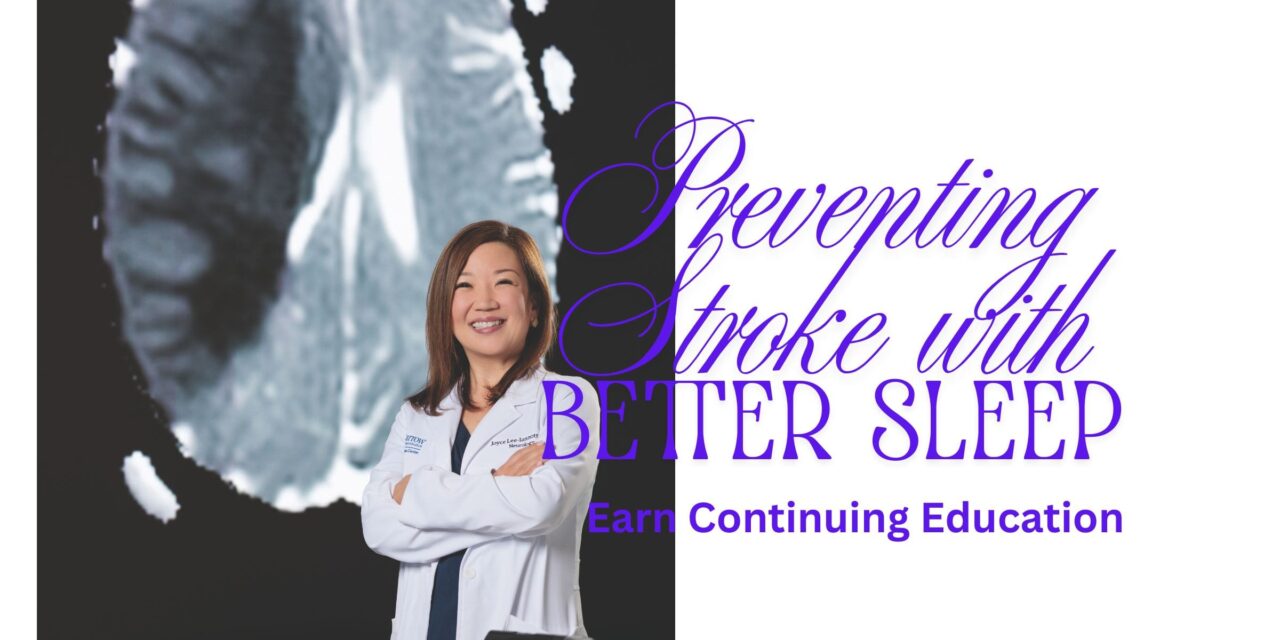
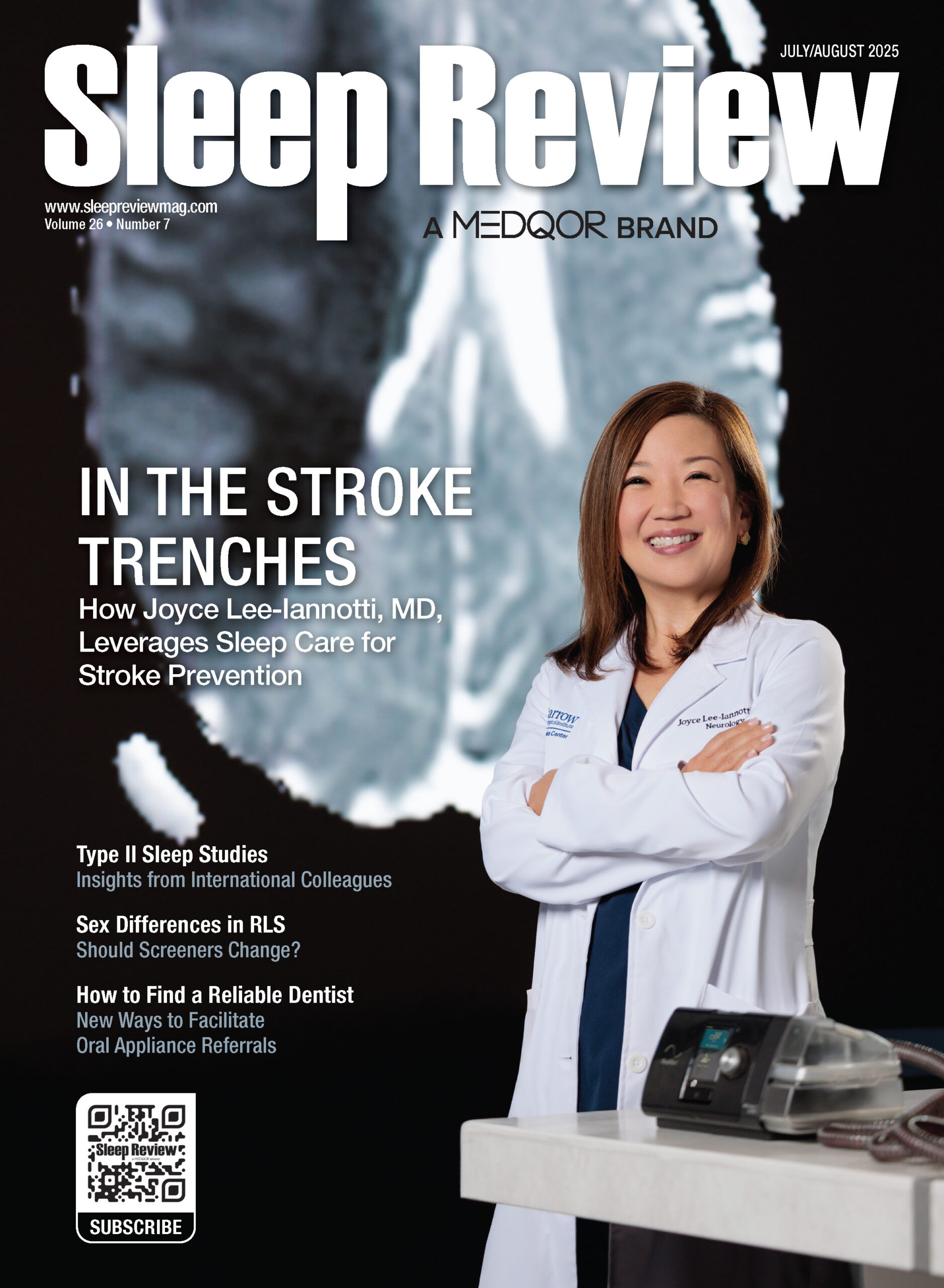
Explore the July/August 2025 Edition
Recognize when to communicate sleep care to stroke patients, learn about more opportunities for type II home sleep tests from colleagues outside of fee-for-service reimbursement systems, describe sex differences in RLS, and more.
The BRPT CSTE will expire on 9/14/26. Take the quiz before then to earn CSTE.
CSTE Exam Preparation Articles
For thorough test preparation, please review these essential articles. They cover key topics and concepts that will be evaluated.
In the Stroke Trenches*
Learning Objectives: Recognize the importance of timing in bringing up sleep care to stroke patients; Identify Joyce Lee-Iannotti’s plans for a comprehensive multidisciplinary Sleep Center to open in spring 2026 at Barrow Neurological Institute; Recognize the expanding research landscape: sleep disorders are increasingly recognized in stroke neurology literature, with stroke journals now more commonly publishing studies on the role of sleep in vascular outcomes.
Home Diagnostics for More Than Sleep-Breathing Disorders Is Already Here—Just Not in the United States*
Learning Objectives: Understand that U.S. reimbursement limitations largely confine home sleep testing to diagnosing sleep apnea only, while international clinicians use the same type II home sleep systems for diagnosing a wide range of sleep disorders; Explain how sleep specialists in Austria and the Netherlands have shifted substantial portions of their diagnostic workflows to type II home testing, reducing in-lab beds and wait times, while diagnosing disorders such as parasomnias and hypersomnias; Understand that type III home sleep tests are still used internationally but typically serve initial screening and long-term monitoring roles, complementing—not replacing—the broader diagnostic power of type II systems.
Sex Differences Offer Clues to Better Restless Legs Syndrome Care
Learning Objectives: Describe the sex differences in RLS symptoms: women report mostly sensory symptoms, while men report more motor symptoms such as periodic limb movements; Recall that reproductive hormones like estrogen and progesterone may trigger symptoms during pregnancy, though direct comparisons between women with and without RLS show no major hormonal differences; Explain the role of iron status and iron testing in RLS.
What to Do When There Are No Dental Sleep Medicine Practitioners Around*
Learning Objectives: Identify telemedicine-based solutions that offer virtual care workflows to facilitate oral appliance access; Recognize that ENT physicians may provide oral appliance therapy in-house—especially where trained dentists are scarce—and that they are “clearly and uniquely well-qualified” per the AAO–HNS; Know how to use online directories to identify qualified dentists—even beyond immediate local areas—since patients may travel for care.
Try This Scandinavian Alternative to Sleep Divorce*
Learning Objectives: Understand the concept of the “Scandinavian sleep method”, where couples share a bed but each uses their own twin-sized blanket; Identify key findings from the IKEA 2025 Sleep Report; Understand that the Scandinavian sleep method may serve as a cost-effective alternative to sleep divorce.
Terms for CSTE Qualification
The Board of Registered Polysomnographic Technologists (BRPT) designates this educational activity for a maximum of 0.5 Continuing Sleep Technology Education (CSTE) credits. Individuals should claim only those credits that he/she actually earned in the educational activity. Certificates are issued on Fridays.
To be awarded Continuing Sleep Technology Education (CSTE) credit, BRPT-credential holders must read the digital edition of Sleep Review and score 80% or higher on the post-test. The participant may re-take the post-test up to 3 times. If unable to achieve a passing score, credit cannot be issued.
Questions/comments: Email [email protected]
* Conflict of Interest: Articles are written by employees of Sleep Review, which accepts sleep marketer advertising