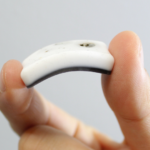
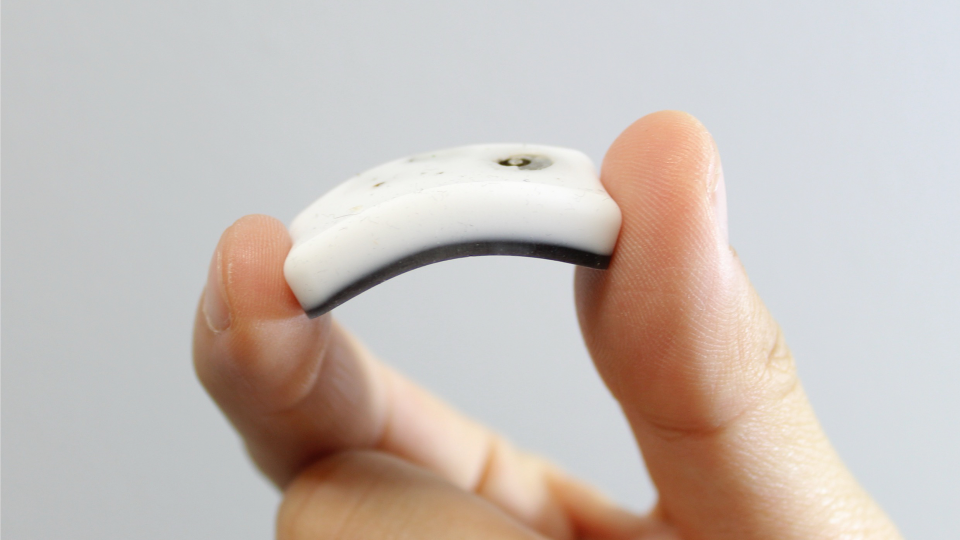
Georgia Tech researchers developed a wireless wearable to track physiological changes linked with sleep and brain health in the home setting.
Key takeaways:
- A newly developed soft, wireless wearable uses near-infrared spectroscopy to monitor brain water and glymphatic clearance dynamics during sleep.
- The device transmits data via Bluetooth, allowing for sleep studies in a natural home environment rather than a clinical setting.
- Researchers note the device focuses on changes and trends over time, as optical measurements can be influenced by factors like motion and temperature.
Researchers at Georgia Tech recently developed a soft, wireless wearable device designed to enable home-based monitoring of physiological changes associated with sleep and brain health.
During sleep, the brain’s waste-clearing process, known as the glymphatic system, removes metabolic waste accumulated during awake hours. Poor sleep quality can lead to the accumulation of this waste, potentially disrupting cognitive function and memory formation. Traditional methods for monitoring these brain functions, such as MRI and polysomnography, are often costly and limited to clinical settings.
A recent study published in Science Advances details how the new device uses light-based sensing and wireless communication to support natural sleep monitoring at home.
“This paper introduces the first soft, wireless, and noninvasive wearable near-infrared spectroscopy system capable of continuously monitoring brain water and glymphatic clearance dynamics in a natural home sleep environment, overcoming the restrictive, costly, and invasive limitations of traditional methods like MRI and polysomnography,” says W Hong Yeo, Peterson endowed professor in the Woodruff School of Mechanical Engineering and director of the Wearable Intelligent Systems and Healthcare Center and the Korea Kiat-Georgia Tech semiconductor electronics center, in a release.
The wearable device operates by emitting LED light at specific wavelengths. The light interacts with tissue and fluid near the brain, and reflected signals are detected by a photodetector placed on the skin. Collected data is then transmitted wirelessly via Bluetooth to a nearby device for analysis.
The research team notes that optical measurements can be influenced by variables beyond brain-related fluid changes, including breathing depth, slight shifts in forehead pressure, body position, motion, and temperature drift. Consequently, the researchers focused on changes and trends over time rather than claiming precise measurements of brain water content. They also emphasize that some of the measured signals may reflect effects from the skin, scalp, device pressure, or movement.
By making sleep monitoring more accessible, the technology could help advance future studies of sleep, glymphatic activity, and brain health in real-world settings.