The peer-reviewed study highlights how the sublingual cyclobenzaprine formulation targets nonrestorative sleep and bypasses first-pass metabolism.
Key takeaways:
- TONMYA demonstrated higher dose-normalized bioavailability and a faster time to peak plasma concentration compared to oral extended-release cyclobenzaprine.
- The sublingual formulation is designed to bypass first-pass liver metabolism, delivering maximum plasma levels during the middle of the sleep phase to target nonrestorative sleep.
- Daily administration over 20 days was generally safe and well-tolerated, with somnolence noted as an expected attribute for the bedtime-indicated therapy.
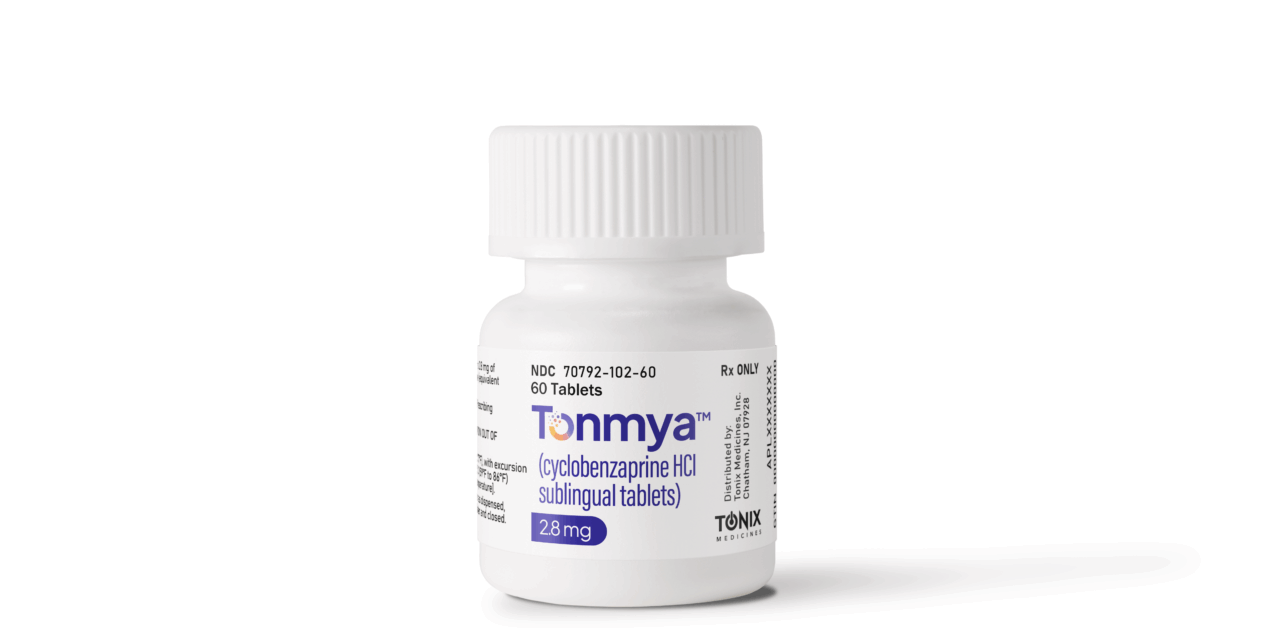
Tonix Pharmaceuticals Holding Corp announced the publication of a study detailing the steady-state pharmacokinetic properties of TONMYA (cyclobenzaprine HCl sublingual tablets) in the peer-reviewed journal Clinical Pharmacology in Drug Development.
The paper reports findings from a single-center, randomized, open-label, multiple-dose study of 60 healthy adult volunteers. Participants received either sublingual cyclobenzaprine HCl 5.6 mg (two 2.8 mg tablets, the FDA-approved adult dose of TONMYA) or oral cyclobenzaprine HCl extended-release 30 mg capsules once daily for 20 consecutive days.
“TONMYA’s sublingual tablet was developed for long-term daily dosing at bedtime to target the nonrestorative sleep associated with fibromyalgia,” says Seth Lederman, MD, CEO of Tonix Pharmaceuticals, in a release. “Therefore, the steady-state pharmacokinetic profile at day 20 is more relevant to the product’s indicated dosing regimen than single dose PK.”
Lederman notes that the sublingual tablet uses a basifying ingredient and cyclobenzaprine–mannitol eutectic to speed transmucosal absorption. This design bypasses first-pass liver metabolism and delivers maximum plasma levels of cyclobenzaprine during the middle of the sleep phase.
“The dynamic changes in cyclobenzaprine concentrations are magnified by the higher predicted percentage of receptors by cyclobenzaprine relative to norcyclobenzaprine occupied during sleep hours after bedtime dosing,” says Gregory Sullivan, MD, chief medical officer of Tonix Pharmaceuticals, in a release.
Sullivan adds that 5-HT2A antagonism increases slow wave sleep activity during non–rapid eye movement sleep, while α1-adrenergic antagonism increases the time and continuity in REM sleep and reduces noradrenergic sympathetic tone, which can otherwise impair the quality of slow wave sleep.
At steady state on day 20, exposure to both plasma cyclobenzaprine and norcyclobenzaprine for the 5.6 mg sublingual tablets was lower than the 30 mg oral extended-release capsules. However, when normalized by dose, the sublingual formulation demonstrated markedly higher cyclobenzaprine bioavailability.
Additionally, the sublingual formulation reached its median time to peak plasma concentration earlier than the oral capsule on day 1 (five versus eight hours) and maintained this faster uptake at day 20 (five versus seven hours).
The 20-day dosing regimen was generally safe and well-tolerated, with no serious adverse events or discontinuations due to adverse events. All treatment-emergent adverse events were mild or moderate in severity. The most common adverse events reported at higher rates than the oral capsules included oral hypoesthesia, abnormal product taste, somnolence, back pain, and fatigue. Since TONMYA is prescribed for bedtime administration, the company notes that the effects of somnolence are expected to be an attribute of the therapy.