
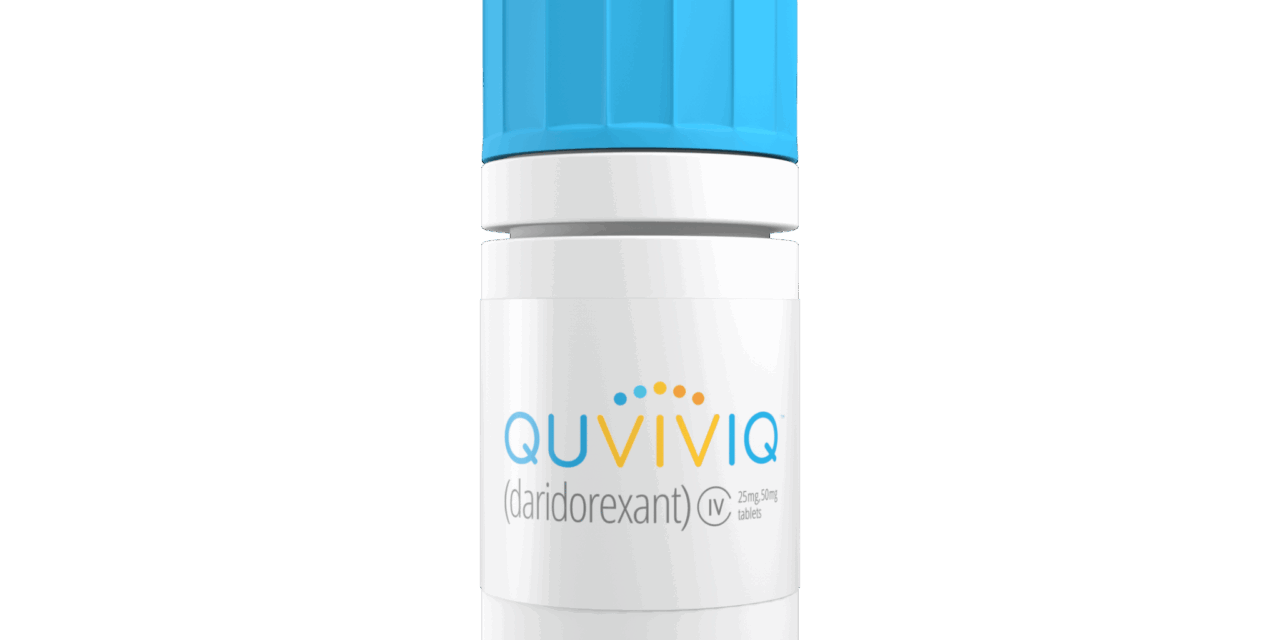
A new analysis of phase 3 trial data published in Maturitas supports the efficacy and safety of the dual orexin receptor antagonist for insomnia in this patient population.
Key takeaways:
- A new analysis published in Maturitas evaluates daridorexant 50 mg in women aged 47-55 with insomnia, a population representative of the menopausal transition.
- At month three, the treatment group showed improvements versus placebo in wake after sleep onset, self-reported total sleep time, and daytime functioning scores.
- The incidence of somnolence and fatigue was low and comparable to placebo, with no increase in next-morning sleepiness observed.
- Daridorexant will also be included in CELESTE, a new Brigham and Women’s Hospital study comparing treatments for menopause-related insomnia.
A new analysis of phase 3 trial data, published in the journal Maturitas, shows that daridorexant (QUVIVIQ) improves sleep and daytime functioning in women aged 47-55 with insomnia disorder.
The analysis is based on data from a previously published randomized controlled trial and focuses on a subpopulation representative of the menopausal transition, where sleep disturbance is a prevalent symptom. According to the findings, daridorexant 50 mg improved both sleep measures and daytime functioning compared to placebo.
At month three, participants taking daridorexant experienced a 29.4-minute reduction in wake after sleep onset from baseline, compared to a 6.1-minute reduction for placebo. Self-reported total sleep time increased by 57.8 minutes, versus 23.5 minutes for placebo. Daytime functioning, as measured by the Insomnia Daytime Symptoms and Impacts Questionnaire sleepiness domain score, also improved, with a reduction of -4.77 points compared to -2.63 for placebo. The incidence of somnolence and fatigue was low and similar to placebo.
“Insomnia disorder affects approximately one in four women during the menopausal transition, yet is often underdiagnosed and certainly undertreated,” says Zoe Schaedel, BMedSci, BMBS, MRCGP, a general practitioner, British Menopause Society menopause specialist, and co-author of the manuscript, in a release. “It is essential that clinicians consider the diagnosis of insomnia disorder when sleep disturbances arise during the menopause transition rather than considering it merely secondary to menopausal symptoms, allowing access to evidence-based treatments.”
In addition to these findings, Idorsia’s dual orexin receptor antagonist has been selected for inclusion in the CELESTE study, a new clinical trial focused on menopause-related insomnia conducted at Brigham and Women’s Hospital, a teaching affiliate of Harvard Medical School. The study will compare the effectiveness and safety of different treatment approaches.
“We are excited for daridorexant to be included in this important study, as insomnia is associated with numerous serious health conditions, and is particularly common in women dealing with menopause,” says Antonio Olivieri, MD, chief medical officer and head of global medical affairs at Idorsia, in a release. “Daridorexant works differently from other insomnia medications by decreasing overactive wake signaling, which is a key cause of insomnia.”
Funded by the Patient-Centered Outcomes Research Institute (PCORI), the CELESTE study will enroll approximately 900 peri- and post-menopausal women with insomnia. Participants will receive treatment for 12 months, with insomnia symptoms measured at baseline and at three, six, and 12 months. The study will monitor how treatments work based on factors like hot flash severity, sleep apnea presence, and menopause stage.