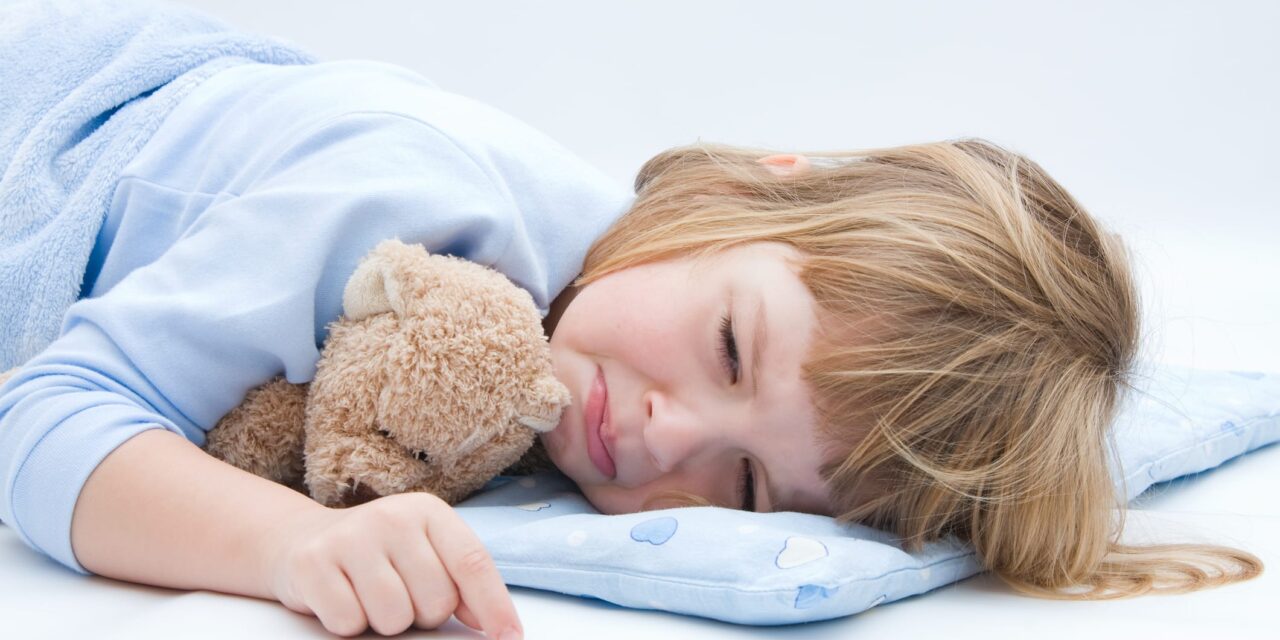
Preparation at home, child-friendly environments, and experienced techs can improve the in-lab polysomnography experience for the youngest patients, as well as those with sensitivities or anxiety.
By Sree Roy
An in-lab polysomnogram (PSG) is the gold standard for diagnosing many pediatric sleep disorders, but the experience can be challenging for young patients and their families, not to mention for the sleep tech conducting the study. After all, a successful study hinges on the child’s ability to tolerate a complex array of sensors and wires in an unfamiliar environment, a potential difficulty for any child and more so for those with sensory sensitivities or anxiety.
One study found that children with neurodevelopmental disorders were more than three times more likely to have problems tolerating PSG leads than their neurotypical peers. The study also identified nasal prongs as the most poorly tolerated sensor for all children, with issues reported in 30% of studies.1 These difficulties can compromise data quality and even lead to aborted studies.
Improving a child’s tolerance of a PSG ideally begins before they ever arrive at their nighttime sleep lab appointment. By combining preparation, a child-centric environment, and specialized techniques, sleep medicine professionals can significantly enhance the patient experience—and, hopefully, the quality of diagnostic data.
Pre-Arrival Prep
Setting expectations is a critical first step. “Educating families ahead of time, keeping the setup simple, and helping children feel at ease can go a long way,” says James Davis, DO, DABSM, co-founder and medical director at Twilight Clinic PLLC.
“We sometimes send home the nasal prongs required for flow measurement to get children used to these,” says associate professor Jasneek Chawla, MD, co-author of the paper on tolerance of PSG in children with neurodevelopmental disorders and a pediatric sleep specialist at Children’s Health Qld in Brisbane, Australia. “If they are doing a CPAP titration study, we will usually do a mask fit and send home a mask for play-based desensitization in advance.”
Written resources in child-friendly language and storybooks can also prove useful, notes Chawla, MD, who is also Kids Sleep research group leader at Child Health Research Centre at the University of Queensland. “Pictures can be helpful,” she says.
Pediatric sleep specialist Mary Halsey Maddox, MD, owner of Sleep Dreams, recently authored one such children’s book, Joshua’s Big Night in the Sleep Lab, specifically for this purpose. It walks families through the PSG process, providing tips on how to practice at home with stickers, cotton swabs, and gauze.
Sleep specialists can recommend the book for parents to purchase or even loan copies to families. “This guide gives parents the ability to desensitize the child at home and treat the sleep study as an adventure, turning something negative into a positive success,” Maddox says. “Most of my patients read the book every night for a couple of weeks leading up to the study, and then take it to read at the study. [Kids] then like to tell the sleep techs what to do, and none of it is a big surprise.”
Create a Child-Friendly Lab Environment
Simple, low-cost changes to the sleep lab environment can have an impact. “Make the room conducive for children—décor, lighting, setup,” says Lauri Leadley, CCSH, RPSGT, founder and president of Valley Sleep Center.
Todd Eiken, RPSGT, FAAST, vice president of product development at DyMedix Diagnostics, suggests that “kid-friendly music, coloring books, or even a kid movie during setup can help create a calming environment.” He adds, “A room decorated in child-appropriate colors, a special chair, or a cozy blanket can further ease the experience.”
Distractions are key, according to Chawla, who is also president of the Australasian Sleep Association. “Having things that can distract while you do a setup—toys, a video they like, colorful environments help,” she says, noting that her lab often asks families to bring their own device, like an iPad.
Optimize the Hookup Process
The technologist’s approach during the hookup can make or break the experience. “There is a definite skill in undertaking pediatric sleep studies,” Chawla says. She stresses that the most important factor is having “trained staff who are used to working with children and can do a setup whilst distracting a child and taking breaks.”
The order of sensor application matters. “Clinicians frequently report that saving EEG scalp electrode placement for the end of the setup can make a meaningful difference,” Eiken says. “Applying respiratory effort belts, airflow sensors, and other components first allows the child to acclimate to the sensation of wearing sensors before the more delicate EEG process begins.”
Giving the child a sense of control can also reduce fear. Eiken finds that allowing a child to “hook up” their stuffed animal or doll and letting them touch the sensors can be “remarkably effective.” Similarly, Leadley suggests a technologist can have the toddler help put an electrode on a parent to demonstrate that it doesn’t hurt. Throughout the process, she advises, “Talk to the child—not just the parent.”
Tackle the Toughest Sensors
Nasal prongs are notoriously difficult for children. Both Chawla and Leadley recommend waiting until the child has fallen asleep to apply them. “It’s not ideal, but it’s the only way for some children,” Chawla says.
Sensor design can also play a role. According to Eiken, “the ideal sensor is one that does not require insertion into the nares yet still captures all relevant airflow waveforms.” He notes that companies like DyMedix manufacture pediatric airflow sensors that eliminate the need for nasal prongs.
Once all sensors are in place, keeping them there is the next challenge. “Children can destroy your perfectly crafted hookup in seconds,” Leadley says. To protect EEG leads from “roaming little fingers,” she says many techs use full head bandages. She also notes that good respiratory effort belts are a necessity, as “they are often the only respiratory channel that stays put all night.”
Invest in Pediatric-Specific Equipment
Using equipment designed for adults on children can lead to poor data quality and patient discomfort. “One principle remains constant: sensors used in pediatric studies must be smaller than their adult counterparts,” Eiken says. “In this population, the smaller, the better.”
Appearance is also important. “Kid-friendly designs—bright colors, playful patterns, and pediatric-themed visuals—can help reduce anxiety and make the experience feel less clinical,” Eiken says. DyMedix offers a line of pediatric-sized electrodes and sensors with child-themed designs to provide clinicians with reliable alternatives to oversized adult equipment.
Consider At-Home Alternatives
For some children, an in-lab study may not be feasible. Long wait times for pediatric PSGs can also be a barrier to care. In these cases, home sleep testing (HST) can be a valuable alternative.
Several HSTs have long been available for children ages 2 and older, including SleepImage software as a service and the Nox T3s, and newer wireless platforms are expanding the options.
Kyle Hunter, chief commercial officer at Dormotech, which markets a new, wireless type II HST that’s FDA-cleared for children ages 6 and older, says, “Feedback from clinicians helped shape several aspects of the patient experience. For example, we developed pediatric-specific masks that are appropriately sized and color-coded to make the equipment feel more approachable and less intimidating for children.”
However, clinicians note that HST is not a replacement for in-lab PSG in all cases. “There are still situations where a traditional wired PSG is the better option, particularly when you need the most comprehensive physiologic data or additional monitoring channels that aren’t available with newer wireless systems,” Davis says.
Ultimately, whether in the lab or at home, the goal is the same. As Davis says, “Anything that reduces discomfort and lets children sleep more naturally is going to improve both the patient experience and the quality of the study.”
Sree Roy is editor of Sleep Review.
Reference
1. Lanzlinger D, Kevat A, Collaro A, et al. Tolerance of polysomnography in children with neurodevelopmental disorders compared to neurotypical peers. J Clin Sleep Med. 2023 Sep 1;19(9):1625-31.