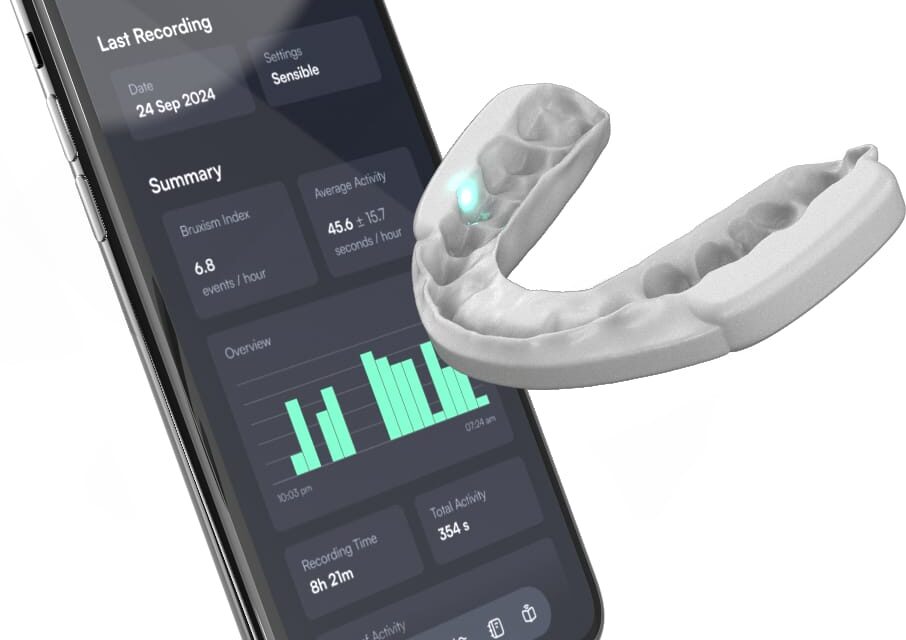
AesyBite Active demonstrated a statistically significant reduction in bruxism activity and improved orofacial pain in a study of 26 patients, supporting Aesyra’s push for FDA approval in 2026.
Key takeaways:
- AesyBite Active achieved a 60.6% reduction in sleep bruxism duration per hour compared to baseline.
- The study reported no adverse events, with patients noting improvements in orofacial pain and device comfort.
- Aesyra has initiated FDA submission and targets US regulatory approval for the device in 2026.
- Unlike passive splints, the device uses biofeedback to detect and reduce bruxism without disrupting sleep.
Swiss medtech company Aesyra SA announced the completion of a clinical investigation evaluating AesyBite Active, a smart oral appliance designed to treat sleep bruxism through biofeedback.
The study demonstrated that the device achieved a statistically significant reduction in sleep bruxism activity, exceeding the company’s predefined performance targets.
In the investigation, which involved 26 adult patients with confirmed sleep bruxism, activation of the AesyBite Active biofeedback system resulted in a 60.6% reduction in total sleep bruxism duration per hour compared to baseline (95% CI: 55.8%–64.9%, p < 0.001).
According to the company, the therapeutic effect was consistent regardless of baseline bruxism severity and independent of when the biofeedback was activated during sleep.
“These results represent a major milestone for Aesyra,” says Marco Letizia, co-founder and CEO of Aesyra SA, in a release. “Demonstrating a consistent and robust reduction in sleep bruxism activity, together with an excellent safety profile, strongly supports the clinical value of AesyBite Active and its potential to change how sleep bruxism is treated.”
The study reported no adverse events. Patient-reported outcomes indicated progressive improvements in orofacial pain, as well as improved comfort and acceptance of the device over time.
AesyBite Active differs from conventional passive splints by combining a customized oral appliance with embedded sensors and active biofeedback. This design allows for real-time detection and reduction of bruxism activity without disturbing the user’s sleep.
“The magnitude and consistency of the effect observed in this investigation are particularly encouraging,” says Marcello Maddalone, principal investigator at the University of Milano-Bicocca, in a release. “The data support AesyBite Active as an effective and well-tolerated therapeutic option for patients suffering from sleep bruxism.”
Following these results, Aesyra has initiated FDA submission, targeting regulatory approval in the US for 2026. European regulatory approval is planned to follow. The company intends to initiate go-to-market activities with existing partners in 2026 and will seek additional partners to expand clinical indications of its platform technology.
Aesyra is also developing AesyBite Custom, a solution leveraging patient-specific intraoral 3D scans and additive manufacturing to enhance personalization in bruxism therapy.