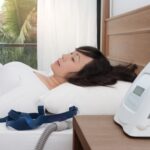

The new guidelines recognize high-frequency peroneal nerve stimulation as an effective, non-pharmacologic option for reducing symptom severity in patients with restless legs syndrome.
Summary: The American Academy of Sleep Medicine (AASM) has issued new guidelines for the treatment of restless legs syndrome (RLS), recognizing high-frequency bilateral peroneal nerve stimulation, such as the Nidra TOMAC system from Noctrix Health, as a non-pharmacologic treatment option. This wearable device provides electrical stimulation to reduce symptom severity in patients with RLS, offering an alternative to dopamine agonists, which have been linked to long-term symptom worsening. The guidelines also recommend alpha-2-delta ligands like gabapentin and pregabalin for RLS treatment.
Key Takeaways:
- New Non-Pharmacologic Option: The AASM guidelines now recommend high-frequency peroneal nerve stimulation, such as the Nidra TOMAC system, as an effective, wearable alternative to medications for reducing RLS symptoms.
- Shift Away from Dopaminergic Drugs: The AASM advises against the routine use of levodopa, pramipexole, and similar medications, due to evidence linking these drugs to the worsening of RLS symptoms over time.
- Strong Recommendation for Alpha-2-Delta Ligands: The guidelines strongly recommend medications like gabapentin and pregabalin for treating RLS based on their proven efficacy in clinical trials.
Noctrix Health announced that the American Academy of Sleep Medicine (AASM) has published new clinical practice guidelines for the treatment of restless legs syndrome (RLS) and periodic limb movement disorder (PLMD) in which the use of high-frequency bilateral peroneal nerve stimulation, such as the Nidra tonic motor activation (TOMAC) system by Noctrix Health, has been recognized with a conditional recommendation for its effectiveness in reducing symptom severity in patients with RLS.
The Nidra TOMAC System delivers electrical stimulation to the peroneal nerves via a pair of leg-worn devices. It was authorized for marketing in the United States in 2023 following its designation as a Breakthrough Device by the US Food and Drug Administration and remains the only clinically validated, non-pharmaceutical treatment available for patients with RLS.
The consensus statement states that TOMAC therapy “represents an alternative approach to pharmacological agents and the potential adverse systemic effects that come with them.”
[RELATED: CMS Establishes Reimbursement Codes for RLS Treatment System]
The new guidelines continue the ongoing evolution in the treatment of RLS, further moving away from long-standing pharmacological options like dopaminergic agonists. The AASM now suggests against the standard use of levodopa, pramipexole, transdermal rotigotine, and ropinirole. This change is largely driven by an overwhelming body of evidence linking these medications to augmentation, a worsening of symptoms with prolonged use.
The guidelines move alpha-2-delta ligands—gabapentin, gabapentin enacarbil, and pregabalin—into the strongly recommended category based on clinical trials of their efficacy for RLS.
Non-Pharmacological Option Now Available
As a non-pharmacological option, the AASM guidelines highlight the clinical benefits of high-frequency bilateral peroneal nerve stimulation, with clinically significant improvement in disease severity observed in patients who used the therapy, many of whom had previously struggled with refractory RLS symptoms. The guideline further concludes that adverse effects are “trivial,” making it a well-tolerated option for long-term management of the condition.
“We are thrilled that the AASM has recognized the value of a non-pharmacologic intervention in its updated practice guidelines, a huge win for patients who express a strong preference for a wearable device therapy to treat this debilitating condition,” says Shri Raghunathan, CEO of Noctrix Health, in a release. “This further strengthens our resolve to continue expanding access to this breakthrough therapy and allow more patients to benefit from the use of efficacious and lower-risk treatment options such as Nidra.”
Mark Buchfuhrer, MD, RLS expert and a sleep medicine physician at Stanford University, adds in a release, “The inclusion of high-frequency bilateral peroneal nerve stimulation in the latest AASM guidelines marks a significant advancement in the treatment of RLS. As a non-pharmacological option, TOMAC therapy offers patients a much-needed alternative, especially for those who have experienced challenges with traditional therapies. Having seen the tangible benefits both as a principal investigator on clinical trials and in real-world usage settings in my practice, I am thrilled for more patients to be able to access therapies like Nidra.”
Photo caption: Nidra TOMAC system
Photo credit: Noctrix Health