
The identification of ‘social apnea’ suggests testing protocols may miss peak disease burden—and misclassify risk.
By Risa Kerslake, RN, BSN
Sleep clinicians are increasingly recognizing that multi-night sleep testing for obstructive sleep apnea (OSA) can better capture night-to-night variability in the apnea-hypopnea index (AHI) rather than single-night polysomnography (PSG) in a lab. But for a significant subset of patients, the worst night of the week may be one that clinicians and their patients are least likely to capture.
Lucia Pinilla, PhD, a research fellow from Flinders Health and Medical Research Institute Sleep Health, along with other researchers from Flinders University, wanted to determine whether OSA severity might differ between weekdays and weekends, as some sleep variables, such as sleep duration and sleep timing, tend to differ on weekends.
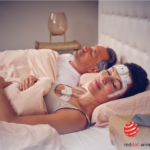
The team analyzed data collected from more than 70,000 participants who used an FDA-cleared under-mattress device from Withings that tracks sleep timing, duration, and AHI. The results, published in the American Journal of Respiratory and Critical Care Medicine, revealed a consistent and significant pattern: OSA severity worsens on weekends, driven by social behaviors and irregular sleep schedules. Participants had 18% higher odds of OSA on Saturdays compared with Wednesdays. Those who slept both longer and later on weekends faced roughly a 55% higher likelihood of OSA on those nights.1
“Social apnea”—the authors’ term for worsened OSA severity on weekends—points to potential gaps in how OSA is currently diagnosed.
Weekend-Weekday AHI Fluctuations
According to the study, AHI was 6% higher on weekends than on weekdays. This may be due to sleep debt accumulated over the work or school week that triggers extended, REM-heavy sleep on weekend mornings, explains Pinilla.
That REM rebound effect might be combined with other Saturday night activities such as alcohol consumption, smoking, larger meals, and later bedtimes. “It’s like a cocktail for having more severe sleep apnea,” Pinilla says. “Some people do have a very stable severity, but for others—and we can’t really anticipate who—there may be a huge variability from one night to the next. So keeping in mind that this can happen is already a big step.”
Social apnea refers to the phenomenon of social jet lag—the misalignment between circadian rhythms and social schedules. Social jet lag has been associated with delays in sleep phase, but is accentuated by social norms.
When patients do home sleep studies, neurologist-sleep physician Jeffrey Durmer, MD, PhD, chief clinical strategy officer for Happy Health, agrees that, ideally, at least one of those nights should be a weekend. On weekdays, home, work, and school obligations are largely routine. “On weekends, people don’t have highly structured schedules. That means they go out and drink more alcohol, stay up later, and throw themselves off their natural cycles, which increases sleep-disordered breathing,” he says.
Pinilla’s related research, published in the journal Sleep, shows that patients with high night-to-night AHI variability are linked to a 34% higher odds of reporting cardiovascular disease than those with stable OSA.2 Her team is working to understand not only why OSA can vary night-to-night, but also the consequences of those variations. “For example, if multi-night monitoring shows mild sleep apnea on average, but with significant night-to-night variation, your risk profile may be comparable to someone with severe sleep apnea,” explains Pinilla, who adds that it’s still too early to tell this conclusively.
Maintaining Normal Behaviors and Routines
Performing a single-night in-lab PSG test can miss important information in some patients, which may explain why these night-to-night changes contribute to the high rates of underdiagnosis of sleep apnea, says Pinilla. Research estimates that up to 80% of people with OSA haven’t received a diagnosis.3
If patients receive one night of testing and that night shows only mild OSA, it could affect whether that patient receives a diagnosis and treatment, says Pinilla.
This can become more problematic when usual behaviors aren’t present for testing, even when testing in the home environment. For instance, if a patient normally drinks alcohol and stays up longer on a Saturday night, but has tests during a weeknight and goes to bed at their worknight time, clinicians may not even see the full picture, even with data from a sleep diary.
Durmer says weekday stress from work or other factors can also impact sleep. He says not only should patients track their habits and stressors in a sleep diary, but that should also be done in conjunction with sleep testing. “We can see what the day was like, what time they went into bed, what sleep felt like, then we’ll have objective data from every night to correlate with those outcomes.”
Treatment Implications of Social Apnea
On top of fluctuations in AHI on weekends compared to weekdays, if patients skip their OSA treatment, such as CPAP, on those days, severity is likely to peak on weekends. “If this happens every weekend, that becomes a problem,” Pinilla says.
Fortunately, patients are becoming increasingly attuned to how weekend behavioral shifts affect CPAP compliance and overall health outcomes, according to Carleara Weiss, PhD, MSH, RN, sleep science advisor at Aeroflow Sleep.
“Up until now, when we’ve looked at compliance, we don’t pay close attention to whether it’s a weekday or a weekend—we look at overall compliance and how OSA symptom severity is changing with CPAP use,” Weiss says. If a patient has at least 70% compliance, but symptoms aren’t improving, clinicians should look at the data to see if more severe symptoms appear on a specific day, such as Saturdays, when patients may not be using their CPAP.
Weiss says patients who show greater OSA severity on weekends might benefit from prioritizing CPAP use on those nights and taking a break, if desired, mid-week instead.
Looking Ahead at Longitudinal Testing
“The more longitudinal data you look at, the more you see night-to-night variability. Programs that do multinight sleep testing—not just one to three nights—but more than a week or more of data collection can characterize sleep across different stress points in a week,” Durmer says.
Longitudinal testing beyond a few nights can also mean patients can experiment with different OSA triggers, such as supine positioning or alcohol consumption, to find out what has the most effect on their breathing, and discover potential benefits of both medical and non-medical treatments.
Protocols and guidelines for conducting day-specific sleep studies to diagnose OSA may not change anytime soon, but by combining the understanding of weekend severity along with home CPAP night-by-night assessment data, clinicians can pay more attention to and make suggestions for patients on the weekends, Weiss says.
She says, “As sleep medicine evolves, we are constantly moving towards having a more personalized, tailored approach for people to first make sure that the treatment is the best option for them, and second, that they stay compliant with the treatment.”
References
1. Pinilla L, Lechat B, Scott H, et al. “Social Apnea”: Obstructive sleep apnea Is exacerbated on weekends. Am J Respir Crit Care Med. 2025 Dec;211(12):2402-4.
2. Lechat B, Pinilla L, Sansom K, et al. High night-to-night variability in OSA severity is associated with prevalent cardiovascular disease. Sleep. 2026 Mar 26:zsag084.
3. Watson N, Yu K, Campbell D, et al. 0637 Prevalence and unmet need of obstructive sleep apnea in the United States. Sleep. 2025 May;48(suppl_1):A278.