Explore the March 2025 Edition
Describe the concept of “personalized population health,” explore next-gen oral appliance sensors, learn how to reduce time to treatment for patients interested in neurostimulators, and more.
The BRPT CSTE will expire on 3/11/26. Take the quiz before then to earn CSTE.

CSTE Exam Preparation Articles
For thorough test preparation, please review these essential articles. They cover key topics and concepts that will be evaluated.
Personalizing Population Health
Learning Objectives: Describe the concept of “personalized population health” including an example about average sleep duration; gain perspective on the advantages of collecting real-world sleep and health data versus only collecting data in the lab; gain an overview of “digital twin” technology and how it could be used to personalize sleep therapies.
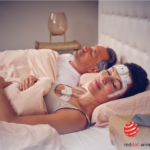
The New Case for Smart Oral Appliances*
Learning Objectives: List several factors propelling the development of a new generation of smart oral appliances for sleep apnea; explain potential advantages of a sensor measuring sleep-breathing parameters located in the mouth versus elsewhere on the body; describe advancements toward an “APAP for oral appliances.”
How Should MSLT Protocols Differ in Children?*
Learning Objectives: List key updates to the AASM’s pediatric-specific guidelines for the multiple sleep latency test; understand why physicians are to use clinical judgement in whether sleep-disordered breathing should be treated in children before an MSLT versus the recommendation that SDB treatment be required for adults; give examples of modifications that could be made for special pediatric populations.
Sleep Labs Are Still Using Fax Machines. There’s an Easy Fix for That.
Learning Objectives: List factors driving the rise of HL7 integration in sleep labs; explain the advantages of HL7 in the sleep lab versus other data transfer methods; understand obstacles to HL7 integration in sleep labs.
How to Reduce the Time to Treatment for Patients Getting Sleep Apnea Neurostimulators*
Learning Objectives: List ways to make appointments more efficient for sleep apnea patients; describe ways to streamline the third-party payor process for neurostimulators for sleep apnea; explain the key findings of a University of Michigan Health pilot in which neurostimulator candidates experienced DISE and implantation during the same operating room session.
eTerms for CSTE Qualification
The Board of Registered Polysomnographic Technologists (BRPT) designates this educational activity–Sleep Review’s Nov/Dec 2024, January 2025, & March 2025 Digital Edition series—for a maximum of 1.5 Continuing Sleep Technology Education (CSTE) credits. Individuals should claim only those credits that he/she actually earned in the educational activity. March 2025 edition is worth 0.5 credits on its own; certificates will be issued every other week on Fridays to allow time for completion of the entire series, if desired.
To be awarded Continuing Sleep Technology Education (CSTE) credit, BRPT-credential holders must read the digital edition of Sleep Review and score 80% or higher on the post-test. The participant may re-take the post-test up to 3 times. If unable to achieve a passing score, credit cannot be issued.
Questions/comments: Email [email protected]
* Conflict of Interest: Articles are written by employees of Sleep Review, which accepts sleep marketer advertising