
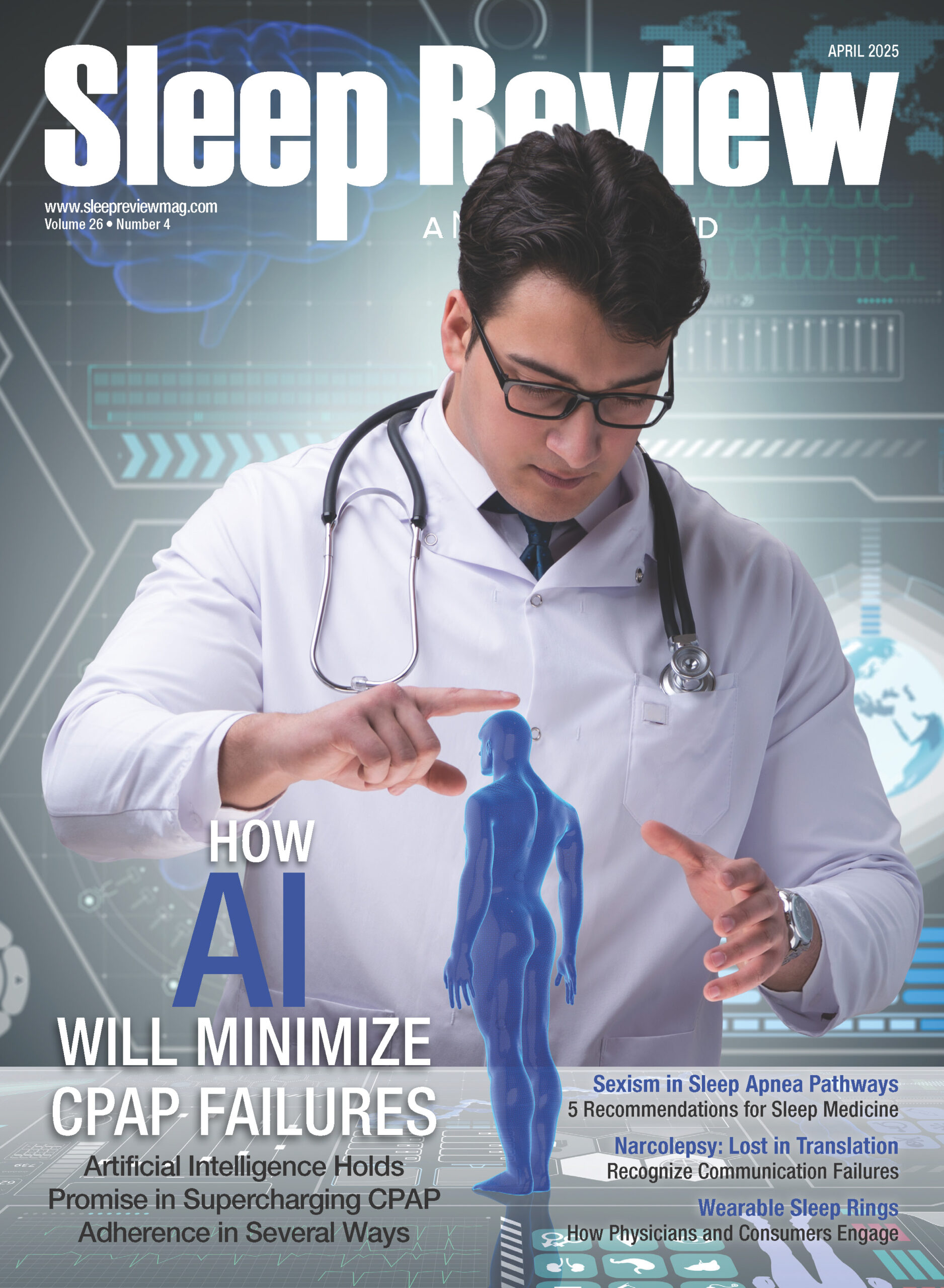
Explore the April 2025 Edition
Understand the promise of AI to improve CPAP adherence, get recommendations for more inclusive protocols for OSA screening, recognize communication failures in narcolepsy diagnosis, and more.
The BRPT CSTE will expire on 9/14/26. Take the quiz before then to earn CSTE.
CSTE Exam Preparation Articles
For thorough test preparation, please review these essential articles. They cover key topics and concepts that will be evaluated.
How AI Will Minimize CPAP Failures*
Learning Objectives: Understand the strengths of artificial intelligence in sleep medicine compared to human intelligence; Describe how AI-powered solutions like EnsoTherapy support sleep coaches in prioritizing and troubleshooting patients more effectively than traditional methods; Explain how AI enhances CPAP pressure personalization beyond existing in-lab titrations and APAP algorithms.
How Narcolepsy Gets Lost in Translation
Learning Objectives: Describe how miscommunication—patients using non-medical language and physicians interpreting those terms literally—can lead to misdiagnoses, such as depression, instead of narcolepsy; Identify recommendations for clinicians: ask specific, impact-oriented questions like “What can’t you do because of your sleepiness?” to better understand symptom severity and guide diagnosis; Summarize strategies to enhance narcolepsy diagnosis: utilizing family or caregiver observations, asking them to document or video symptoms, and avoiding assumptions about patient-reported experiences.
Sleep Rings Go Full Circle*
Learning Objectives: Recognize why sleep rings are increasingly transitioning from home testing to longitudinal monitoring; Describe the science behind sleep ring sensors; List limitations of consumer sleep rings that are popular but not FDA cleared.
The Sexism in Sleep Apnea Diagnostic Pathways*
Learning Objectives: Describe how common OSA screeners fail to adequately detect OSA in women by excluding symptoms like insomnia and by inherently weighting gender; Explain that women with OSA often present with symptoms such as headaches, dry mouth, nasal congestion, and fragmented sleep, and are also significantly less likely to be aware of snoring; Identify recommended practices to improve OSA screening in women.
Secrets to Improving Sleep Lab Performance from Accreditation Experts*
Learning Objectives: Understand that tracking and analyzing quality metrics—such as failed studies—on a monthly or quarterly basis rather than only at reaccreditation time can save time, money, space, staffing, and potentially support business viability; Identify the recommendation to transition from retrospective to prospective performance monitoring; Describe how the plan–do–check–act framework can be applied to sleep lab performance metrics.
Terms for CSTE Qualification
The Board of Registered Polysomnographic Technologists (BRPT) designates this educational activity for a maximum of 0.5 Continuing Sleep Technology Education (CSTE) credits. Individuals should claim only those credits that he/she actually earned in the educational activity. Certificates will be issued every Friday to allow time for completion of the entire series, if desired.
To be awarded Continuing Sleep Technology Education (CSTE) credit, BRPT-credential holders must read the digital edition of Sleep Review and score 80% or higher on the post-test. The participant may re-take the post-test up to 3 times. If unable to achieve a passing score, credit cannot be issued.
Questions/comments: Email [email protected]
* Conflict of Interest: Articles are written by employees of Sleep Review, which accepts sleep marketer advertising