I tested two AI “selfie screeners” for sleep apnea. Here is a look at their current clinical applications, and why a “false positive” might be a glimpse into your health’s future.
By Sree Roy
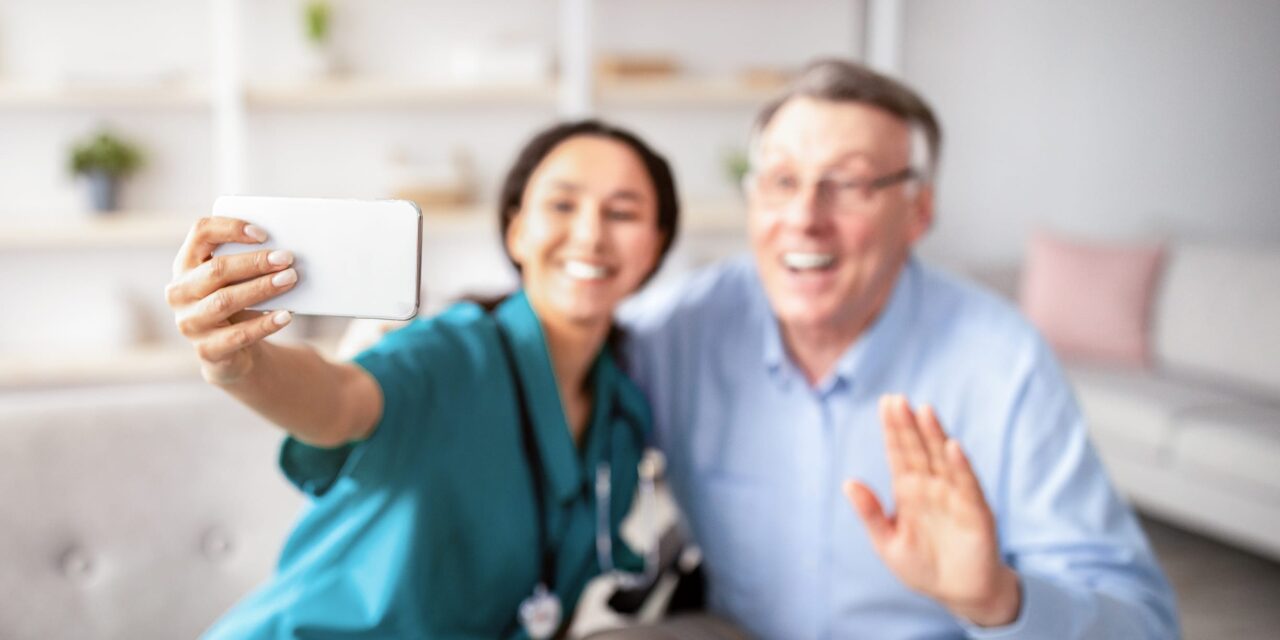
Recently, I tried two “selfie screeners” for obstructive sleep apnea (OSA). It was a neat party trick—I snapped a single selfie, then an app told me whether my face has visual markers linked to OSA.
Both flagged me for OSA markers and recommended I speak to a physician. Spoiler alert: I often take home sleep studies for fun (part of my job at Sleep Review), so I already know that my AHI has only ever been calculated as under 1 (no OSA).
I then spoke with Steve Glinka, MPH, RSPGT, president of the BRPT, who has been vetting the screeners as regional VP of operations and clinical support at Pivotal Health. Glinka, who has a diagnosis of mild OSA, had also tried the same two selfie screeners: one flagged him as having a significant risk, while the other detected no visual markers of OSA.
So for these screeners to reach their massive potential—easy, population-level screening for OSA—my “n” of 2 study only tells me we need more data. I’d love to see peer-reviewed validation studies, including details of the dataset diversity (age, sex, race, etc).
That aside, I do love the concept of modernizing cephalometrics. The measurements are objective; they don’t rely on anyone’s observations of snoring or guesses as to how sleepy they can be.
I also spoke to sleep physician Dimi Barot, MD, because he has deployed Soliish FaceX and workflow solution at telehealth practice Arima Health, where the novel screening is paired with validated questionnaires. “To be able to use this type of technology as a screening and sleep education/awareness tool has been very helpful and powerful,” Barot said.
“The goal is to have a reliable mechanism that’s widely deployable with minimal friction at the ‘top of the funnel’ to be able to cast an appropriately wider net on the large patient population that’s suffering from sleep-related breathing disorders and maybe doesn’t check off the so-called ‘traditional phenotype boxes.’”
How could the selfie screeners improve? Scientist Azadeh Yadollahi, PhD, who co-authored a review of the screeners, suggests a “3D panoramic” approach that incorporates multiple photos with at least one profile shot would yield more accurate data. Also, she told me, “It is important to calibrate it.” She remarked that my eyeglasses did not concern her as much as did the location of my hair (over my ears), as well as potentially the room’s lighting.
Still, my screens do make me worry that my OSA status is vulnerable to change, such as if I become overweight or after menopause. “I think you nailed it,” Barot responded. “The current utility of this type of screening mechanism is to identify those patients who are at risk…but the more powerful downstream utility of a tool like this is to be able to use high-fidelity facial data for predictive value later in life, when you have, for instance a craniofacial flag, and then at some point, you’re identified as having, for instance, hypertension.” Point taken, selfie screeners. I’ll keep your message in mind.