A new study shows that newborn fallow deer fawns exhibit significant individual differences in sleep patterns and developmental rates right from birth, much like human infants.
Summary: New research reveals that newborn fallow deer fawns exhibit individual variations in sleep patterns and developmental rates, similar to human infants. Conducted at Phoenix Park using biologging technology, the study tracked fawns’ sleep during the first five weeks of life, highlighting differences in sleep quantity, quality, and fragmentation. Findings suggest these variations could impact long-term health and reflect broader life-strategy traits. The study also found that sleep quality decreased with higher temperatures and humidity but increased on rainier days. This research provides new insights into the ecological aspects of sleep in wild animals.
Key Takeaways:
- Newborn fallow deer fawns show significant individual differences in their sleep patterns right from birth, with variations in sleep quantity, quality, and fragmentation observed among them during the first five weeks of life.
- The study found that environmental factors such as temperature and humidity adversely affect the sleep quality of the fawns. Specifically, warmer and more humid conditions led to reduced and lower-quality sleep, whereas cooler and rainier conditions seemed to enhance sleep quality.
- Researchers used minimally invasive biologging technology, specifically animal-borne accelerometers, to track and analyze the sleep patterns of the free-ranging fallow deer fawns. This method allowed for a detailed and non-invasive study of sleep in wild animals.
New research has revealed that newborn fallow deer fawns differ both in sleeping patterns and the rate of development from birth on an individual basis, as we see in newborn human babies.
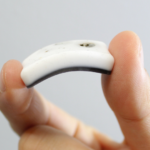
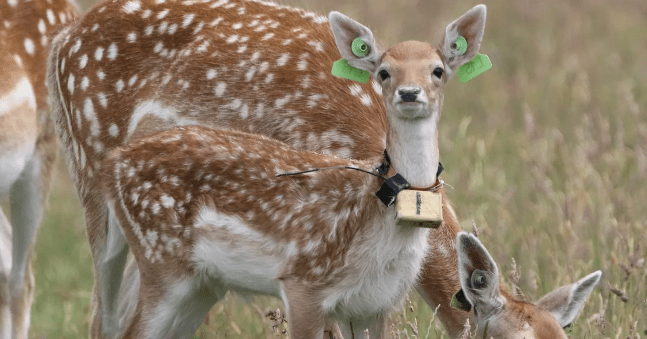
Researchers recorded the sleeping behavior of free-ranging fallow deer fawns during the first five weeks of life at Phoenix Park in Dublin. They used minimally-invasive biologging technology, developed by WildBytes and the Swansea Laboratory of Animal Movement at Swansea University, to track the animals while they remained hidden in the woods and vegetation and isolated from their mothers and wider herd.
Good sleep is essential for health in humans and other animals, playing a fundamental role in development. This study shows marked and consistent individual differences among deer in sleep quantity, quality, and fragmentation, as well as the rate sleep develops—in the first week of life, the shortest sleeping fawn slept about half the time of the longest sleeping fawn.
The study, led by Queen’s University Belfast in collaboration with researchers at Swansea University, and supported by University College Dublin, has been published in Animal Behaviour. It was supported through a department for the economy PhD studentship via Queen’s and the Association for the Study of Animal Behaviour.
Sleeping Habits of Newborn Deer in the Wild
“This is the first study of its kind which has looked at the sleeping habits of newborn species in the wild and has shown fallow deer fawns’ sleep rapidly decreases and consolidates in the first five weeks of life,” says Isabella Capellini, PhD, a researcher at Queen’s University Belfast, in a release. “Our results suggest that differences between fawns may have important implications for the fawns’ future health and might reflect pace-of-life syndromes. That is how individuals invest in growth, reproduction, and health over their lifetime.”
The research also looked at the conditions affecting the sleeping behavior of fawns and found sleep time was reduced and was of lower quality on warmer days and further compromised in more humid conditions, but was higher on days with greater rainfall.
“Understanding the ecology of sleep of wild animals is a fascinating and crucially important topic, but we virtually do not know anything about it, due to the difficulties in recording sleep non-invasively in free-living animals,” says professor Luca Börger, PhD, from Swansea University in a release. “We show how animal-borne accelerometers (sensors similar to those used in Fitbits and mobile phones), if coupled with dedicated software methods to analyze the data, allow us to investigate sleep in the wild for the first time.”
Photo caption: Researchers recorded the sleeping behavior of free-ranging fallow deer fawns during the first five weeks of life, using minimally-invasive biologging technology.
Photo credit: Connie Baker-Horne