
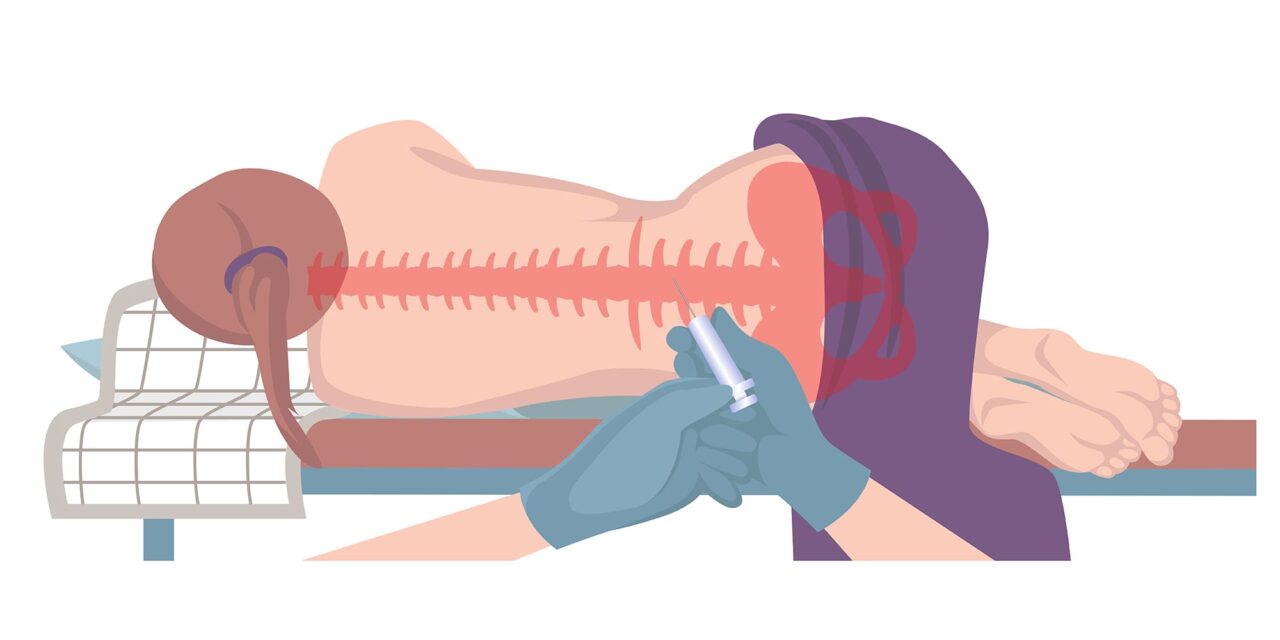
The gold-standard assay for measuring orexin-A (hypocretin-1) deficiency in cerebrospinal fluid requires a lumbar puncture and radioactive materials. New findings could help advance testing alternatives for people with narcolepsy.
By Alyx Arnett
The International Classification of Sleep Disorders, Third Edition, has included cerebrospinal orexin-A (hypocretin-1) deficiency as diagnostic for narcolepsy type 1 since 2014.1 But in the United States, the test was not commercially available until Mayo Clinic Laboratories began offering a radioimmunoassay (RIA) in 2019, says Chad Ruoff, MD, an internal medicine-sleep physician at Mayo Clinic.
That gap created “an interesting predicament for clinicians,” says Ruoff. The field had a recognized diagnostic pathway, but many physicians had limited access to it. Even now, he says, awareness remains uneven. “Even in the last three to six months, we had clinicians reaching out, saying, ‘How do I get this test done?’” Ruoff says.
While the RIA remains the gold-standard clinical assay for measuring cerebrospinal fluid orexin, it has drawbacks. It relies on radioactive materials, requires a lumbar puncture—which many patients decline—and requires days of laboratory processing. Efforts to develop alternative assays have produced mixed results, with many newer methods struggling to match the established RIA.2
New research from Mayo Clinic may help explain why. The findings, derived using liquid chromatography-tandem mass spectrometry, could help lay the groundwork for future testing approaches that are easier to perform and more widely available.
Clue to Simpler Orexin Testing
To understand why newer orexin assays often struggled to match the established RIA, the Mayo Clinic team stepped back and asked: What was the RIA actually detecting?
Study co-author Tony Maus, PhD, co-director of the Clinical Mass Spectrometry Lab at Mayo Clinic, had explored mass spectrometry-based orexin testing after joining Mayo Clinic around 2017, but early efforts did not produce measurements that correlated with either clinical presentation or the RIA.
“We were looking for the wrong thing,” he says.
Rather than target full-length orexin-A, the focus of many previous mass spectrometry efforts, the researchers used the antibody from the RIA to isolate orexin-related peptides from cerebrospinal fluid and then analyzed what the antibody had captured. The researchers identified two abundant N-terminal orexin-A fragments comprising amino acids 1-14 and 1-16. While these fragments had been reported previously,3 the Mayo team found that both closely tracked with clinical RIA measurements. Full-length orexin-A was not detected above the assay’s limit of detection.
The findings suggest that the longstanding RIA may primarily detect orexin-A fragments rather than intact orexin-A.
“It was always suspected in the field that the RIA was not in fact measuring the full-length orexin,” says study co-author Joshua Bornhorst, PhD, associate professor in the Department of Laboratory Medicine and Pathology, co-director of the Mineral Assay Laboratory at Mayo Clinic. “This and some other recent papers appear to lead us to conclude that the majority of orexin exists as fragments.”
The fragments closely tracked with RIA measurements. The study reported Spearman correlation coefficients of 0.91 for the 1-14 fragment and 0.94 for the 1-16 fragment. Using established RIA categories, the liquid chromatography-tandem mass spectrometry approach showed up to 88% concordance with the RIA in classifying samples as low, intermediate, or normal.
Paths Forward for Orexin Testing
If future studies confirm the findings, the work could have implications beyond improving scientists’ understanding of orexin biology. Because the newly identified fragments can be measured using mass spectrometry, the approach could eventually offer an alternative to the RIA currently used to measure cerebrospinal fluid orexin.
Unlike the RIA, a mass spectrometry-based test would not rely on radioactive materials and could potentially reduce turnaround times while improving test availability. Patients would still require a lumbar puncture, but the laboratory testing itself could become simpler and more accessible.
For Ruoff, the longer-term possibility is even more ambitious. “My pipe dream is to have a serum-based test for narcolepsy type one,” he says.
Maus says identifying the fragments gives researchers a clearer target. “Ultimately, it also opens the door to the next generation of serum or plasma testing because now that we know what we’re looking for, we can go after it in other matrices,” he says.
Ruoff says a validated serum-based orexin test could expand access and potentially identify patients with milder or atypical disease who might not undergo CSF orexin testing.
“That’s a paradigm shift, right? Then primary care could be ordering this test,” he says. “I’ve encountered some patients with mild disease that I ended up sending for [cerebrospinal fluid] orexin testing, and they’re actually deficient.”
Orexin Therapies Could Increase Demand for Testing
As orexin-targeting therapies move through development, demand for orexin testing could increase. Ruoff notes that some clinical trials of orexin-based therapies have already required objective testing to confirm narcolepsy type 1.
Bornhorst also expects interest in orexin measurement to grow. “There’s an increase in orexin measurements, not only within the sleep field, but other neurological diseases that have associated sleep disorders,” he says.
While additional validation is needed, the researchers believe their findings could help support the development of more accessible orexin testing in the future. “It seems that we understand what the RIA has been measuring for the last 26 years now,” Ruoff says. “This deserves replication.”
References
- Sateia MJ. International classification of sleep disorders-third edition: highlights and modifications. Chest. 2014;146(5):1387-94.
- Maus A, Figdore D, Chavan S, et al. Identification and quantification of Hypocretin-1/Orexin-A 1-14 and 1-16 fragments in immunopurified cerebrospinal fluid using LC-MS: Comparison with radioimmunoassay (RIA) determinations. Sleep Med. 2026 May 8.
- Vialaret J, Hirtz C, Lotierzo M, et al. 16-mer hypocretin-1/orexin-A in cerebrospinal fluid to diagnose narcolepsy. Sleep. 2025;48(12):zsaf237.
ID 262943484© Ihor Vinichenko| Dreamstime.com