
The collaboration will incorporate at-home electroencephalography to capture objective endpoints for excessive daytime sleepiness in two phase 3 studies.
Key takeaways:
- The partnership will integrate quantitative EEG (qEEG) measurements into Harmony Biosciences’ two Phase 3 studies of HBS-301 for narcolepsy and idiopathic hypersomnia.
- The goal is to complement subjective patient-reported outcomes, such as the Epworth Sleepiness Scale, with objective sleep EEG data to assess excessive daytime sleepiness.
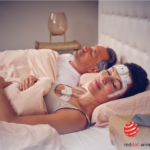
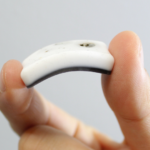
- The trials will use Beacon’s FDA 510(k)-cleared Waveband EEG headband to capture at-home brain data during nighttime sleep and daytime naps.
- Adding qEEG-based endpoints may allow for better characterization of sleep patterns, identification of EEG biomarkers, and improved assessment of treatment efficacy.
Beacon Biosignals and Harmony Biosciences have entered into a collaboration to incorporate quantitative electroencephalography (EEG) measurements into two of Harmony’s phase 3 studies for HBS-301, a potential treatment for narcolepsy and idiopathic hypersomnia.
The collaboration aims to support the assessment of excessive daytime sleepiness (EDS) by adding objective sleep data to traditional subjective measures like the Epworth Sleepiness Scale.
The studies will utilize Beacon’s FDA 510(k)-cleared Waveband EEG headband and AI-driven algorithms to capture brain data from participants in their homes across multiple nights. The wireless design of the headband also allows for continuous EEG data collection during the day to assess daytime naps, providing a more precise view of hypersomnolence in a real-world setting.
“This collaboration with Harmony represents an important step toward bringing quantitative sleep neurophysiology into late-stage drug development,” says David Matthews, PhD, president of life sciences at Beacon Biosignals, in a release. “Measuring objective sleep EEG data alongside subjective endpoints like patient-reported outcomes improves the precision and interpretability of treatment outcomes, and we expect it will accelerate the path toward better therapies for people living with hypersomnia disorders.”
Currently, clinical trials for hypersomnia disorders rely heavily on subjective patient-reported scales, which may not fully represent the true burden of the disease. By adding qEEG-based endpoints, the companies aim to more robustly characterize both daytime and nighttime sleep patterns. This may enable the identification of EEG biomarkers that could inform dose selection, efficacy assessment, and potential patient subgroup analysis.
“By integrating Beacon’s innovative EEG platform into our HBS-301 Phase 3 studies, we aim to bring new levels of objectivity and reliability to clinical endpoints in hypersomnia disorders, enhancing our ability to evaluate treatment benefit and better serve the patient community,” says Kumar Budur, MD, MS, chief medical and scientific officer at Harmony Biosciences, in a release.