Access, adherence, and data stymie sleep apnea patients and clinicians alike. A sleep technology innovator responds by going beyond his company’s wide range of devices to also offer smooth, predictable workflows.
Paid for by Good Sleep Co
Obstructive sleep apnea care often unfolds across disconnected pieces—testing providers, sleep physicians, dentists, device manufacturers, and monitoring platforms—leaving many patients lost somewhere between diagnosis and long-term treatment. As digital screening tools, remote testing, and wearable sensors reshape how patients enter and move through care, some companies are trying to knit those pieces together into a more continuous pathway.
In this Q&A, Joel Simpson, founder of Good Sleep Co, discusses the three structural gaps he believes still define the OSA patient journey—access, adherence, and data—and how his company is attempting to address them through an ecosystem that combines oral appliances, remote testing, patient management software, and continuous monitoring.
Good Sleep Co has grown rapidly in multiple regions. What gap in the sleep care ecosystem are you solving? And why now?
The core gap in sleep care is not technology—it’s orchestration.
Obstructive sleep apnea (OSA) is massively underdiagnosed, under-treated, and poorly managed long-term. Yet the ecosystem is fragmented across testing companies, dentists, sleep physicians, DME providers, manufacturers, and consumer wearables. No one truly owns the full patient journey.
Good Sleep Co was built to solve three structural problems:
- The access gap. Millions of patients with symptoms never enter care.
- The adherence gap. A significant percentage of patients abandon therapy within the first 12 months.
- The data gap. Treatment decisions are episodic rather than continuous.
Why now? Because several forces have converged: digital patient acquisition has matured, remote testing is widely accepted, wearables have normalized personal health tracking, dentists and primary care providers are actively building sleep pathways, and regulators now support decentralized models of care.
We are at an inflection point where sleep care can move from reactive device sales to continuous longitudinal management. That is the shift we are building for.
Oral appliance therapy is evolving fast. How does Good Sleep Co differentiate itself with both custom devices and digital patient-management pathways?
Oral appliance therapy has matured clinically. The delivery model has not.
We differentiate on three levels.
- Product architecture. We provide a tiered ecosystem: custom devices such as Hushd Pro Avera, modular systems like Z-Link, and accessible entry products such as Avera. This allows a structured pathway from awareness and screening through to full custom therapy.
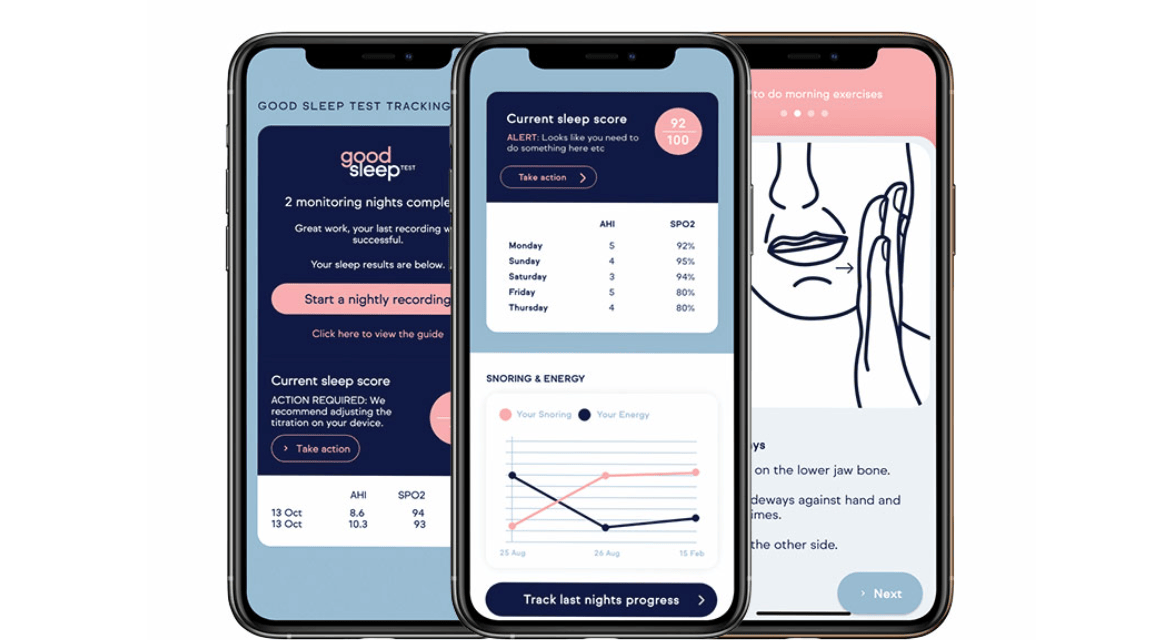
- An integrated patient-management engine. We do not simply manufacture and ship appliances. We provide remote testing, reimbursement support, structured clinical protocols, follow-up cadence, objective data capture, and software integration through our ResDent platform. Clinicians are not looking for more devices. They are looking for predictable workflows and revenue clarity.
- Data infrastructure. Our ecosystem connects device, patient app, testing, and monitoring into a single pathway. That changes oral appliance therapy from a static intervention into a dynamic, data-informed treatment model.
Good Sleep Co now integrates manufacturing, remote testing, and clinical support under one ecosystem. How important is vertical integration to outcomes and scalability?
Vertical integration is not about margin. It is about feedback loops.
When you control manufacturing, software, clinical protocols, patient engagement, and data capture, you shorten iteration cycles significantly. In sleep care, small refinements in titration, design, or follow-up timing can materially change outcomes.
Many device companies operate at arm’s length from the patient. We operate inside the pathway.
This allows faster product iteration, tighter quality control under ISO 13485 standards, stronger data-informed improvements, and margin stability as we scale.
Scalability without outcome integrity requires integration. That is the operating philosophy behind our model.
You recently launched the FDA-cleared Avera and Z-Link in the United States. How is clinician adoption progressing? What feedback are you receiving from dentists and sleep physicians?
Adoption has been strongest among three groups: progressive dental organizations building sleep divisions, physicians seeking structured non-CPAP alternatives, and practices looking for insurance-supported pathways with operational clarity.
The feedback has been consistent.
Clinicians want simpler workflows. They want predictable reimbursement. They want stronger patient follow-through.
They do not want multiple vendors, fragmented processes, and unclear accountability. FDA clearance has strengthened credibility in the US market, particularly in physician collaboration, but what drives adoption is operational simplicity.
When a clinic can implement a compliant, end-to-end pathway rather than just add another device SKU, adoption becomes strategic rather than experimental.
Sense, your upcoming monitoring product, brings consumer-style wearables into clinical sleep workflows. How will continuous data reshape diagnosis, adherence, and long-term patient management?
Sleep care has historically relied on snapshots: one sleep study, one follow-up, perhaps one titration check. That approach is insufficient for a chronic condition.
Continuous physiologic data changes three things.
Diagnosis becomes more representative of real-world variability rather than single-night anomalies.
Adherence shifts from “Did the patient wear the device?” to “Is the therapy physiologically effective?”
Long-term management becomes adaptive. OSA severity fluctuates with weight, aging, alcohol consumption, airway changes, and hormonal shifts. Continuous monitoring allows therapy to evolve instead of stagnate.
The future of sleep care is not static intervention. It is adaptive, data-informed management.
Digital demand generation—especially direct-to-consumer (DTC) awareness of OSA and snoring—has surged. How is Good Sleep Co leveraging digital channels to create clinician-ready patients at scale?
Direct-to-consumer awareness is growing rapidly, but raw DTC lead generation often overwhelms clinics.
Our focus is clinician-ready patients.
That means structured education before consultation, symptom triage prior to referral, remote testing options, and upfront insurance clarity. Digital should not bypass clinicians—it should strengthen them.
We see digital channels as three engines: demand creation, structured intake, and education. The critical shift is linking marketing analytics to clinical outcomes, not just cost per lead.
If a channel produces high dropout at six months, we adjust. If a pathway improves long-term adherence, we scale it. Growth must be tied to outcomes, not just acquisition metrics.
With ISO 13485 certification underway and Australian Therapeutic Goods Administration (TGA)/US FDA pathways expanding, how does Good Sleep Co approach regulatory strategy as a competitive advantage?
Regulation is often treated as friction. We treat it as infrastructure.
ISO 13485 discipline embeds risk management, traceability, structured CAPA [Corrective Action and Preventive Action] systems, and documentation rigor into daily operations. As we expand across TGA and FDA pathways, regulatory clarity builds physician trust, strengthens payer discussions, creates barriers to entry, and protects long-term brand integrity.
Sleep care is becoming more visible and more scrutinized. Companies built for oversight will outperform those built for speed alone.
In our view, regulatory depth is not a cost center. It is a strategic asset.
This content is paid for by: