
A new study finds strong agreement between the Onera Sleep Test System and traditional polysomnography for AHI and other key respiratory metrics.
Key takeaways:
- A multicenter study of 206 participants found Onera’s patch-based polysomnography (PSG) system demonstrated strong to very strong agreement with traditional in-lab PSG for most respiratory metrics.
- The system showed a concordance correlation coefficient of 0.90 for the AHI, 0.86 for the obstructive apnea index, and 0.78 for the central apnea index.
- The device demonstrated high diagnostic utility in distinguishing obstructive sleep apnea severity, with an area under the curve of ≥0.89 for AHI thresholds of 5, 15, and 30.
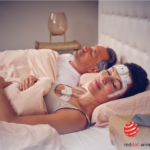
A new multicenter study published in ERJ Open Research has validated the respiratory event-scoring capabilities of Onera Health’s patch-based Onera Sleep Test System (STS), finding strong agreement with traditional, in-lab polysomnography (PSG).
The study, which is the second publication from this research, provides evidence that the type II home sleep test can accurately identify respiratory events and classify AHI severity, positioning it as a viable option for unattended home use. The first study found high concordance between the Onera STS and traditional PSG across essential sleep variables and key respiratory parameters, as well as substantial epoch-by-epoch agreement in sleep staging and comparable inter-scorer reliability between the two systems.
The second analysis involved 206 participants who underwent simultaneous sleep studies with both the Onera STS and a traditional PSG system at seven clinical sites in Germany and a core lab at Johns Hopkins University. Recordings were evaluated by three independent, blinded scorers.
Results showed a strong positive correlation between the two devices for key respiratory indices. The concordance correlation coefficient (CCC) for the apnea-hypopnea index was 0.90, the apnea index was 0.89, the obstructive apnea index was 0.86, and the central apnea index was 0.78. Moderate agreement was found for the hypopnea index (CCC=0.68). The device also showed high discriminative ability for AHI severity thresholds of 5, 15, and 30, with area under the receiver operating characteristic curve (AUC) values of 0.89, 0.92, and 0.94, respectively.
“The ability to achieve results from home PSG testing that are equivalent to in-lab PSG will help remove the barriers to access created by resource limitations, thus providing accurate diagnosis to significantly more patients suffering from under- or undiagnosed sleep disorders,” says David P. White, MD, a member of the medical advisory board at Onera Health, in a release.
One of the device’s design differences is its use of a forehead sensor for SpO2 measurement, in contrast to the traditional finger probe. The study found that SpO2 values from the forehead were consistently higher across all sleep stages. Despite this, the oxygen desaturation index (ODI) derived from the forehead sensor maintained a strong correlation with the finger-probe measurement (CCC=0.79). The authors note this difference in measurement location may influence the assessment of hypoxic burden.
“This validation study further demonstrates that our innovative, patch-based technology can deliver the level of accuracy needed for a home PSG sleep test, with an accuracy that is equivalent to that of traditional in-lab PSG for all relevant clinical parameters,” says Ruben de Francisco, founder and CEO of Onera Health, in a release.
The study authors identified several limitations, including a study population that was primarily composed of individuals with mild obesity and lacked reported racial diversity, which is particularly relevant given known inaccuracies in SpO2 measurements among individuals with darker skin tones. The study also noted that its findings are based on manual scoring, and whether automated analysis can produce comparable results requires further investigation. Additionally, the study did not evaluate patient-led, self-application of the device in a home setting, which is the subject of ongoing research.