
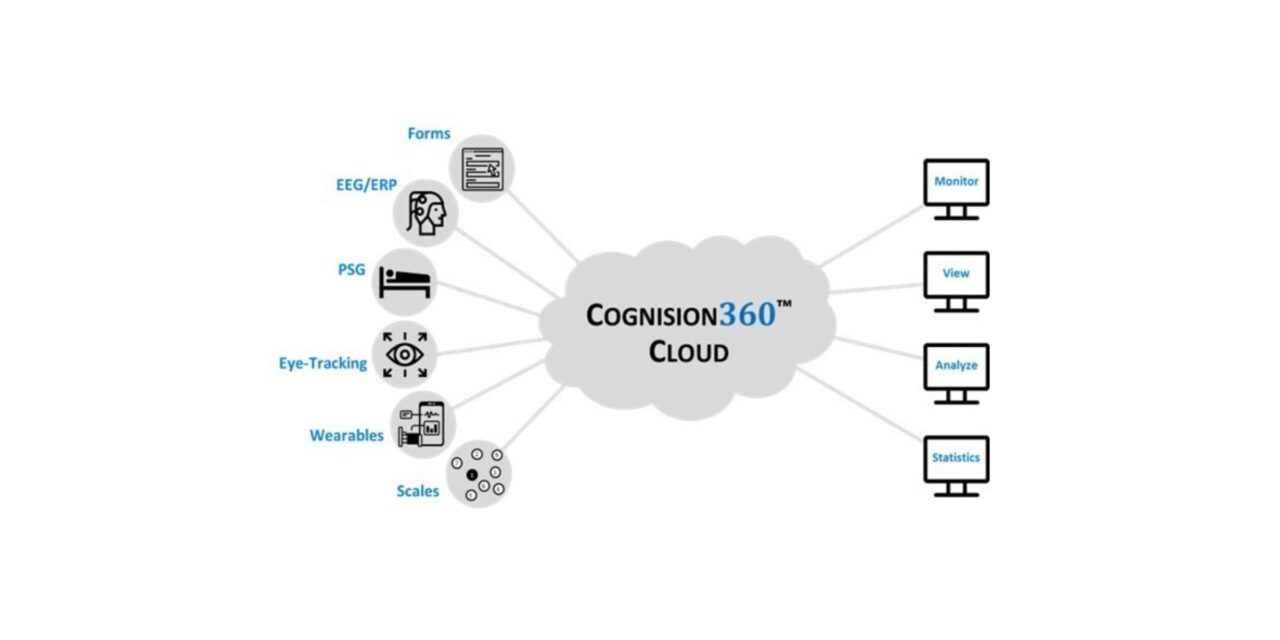
Cognision360 consolidates multiple data streams, including PSG and EEG, into a single system to reduce errors and streamline data integration for drug development.
Key takeaways:
- Cognision360 brings together data from PSG, EEG, wearable sensors, and other assessments into one standardized platform.
- The system automatically tags data with study metadata, eliminating manual transcription and accelerating database lock.
- The platform uses deterministic, rules-based analytical methods to ensure transparency and reproducibility for regulatory submissions.
- The software embeds protocol-defined workflows to ensure consistency across sites, users, and timepoints.
Cognision has unveiled Cognision360, a web-based platform designed to consolidate multiple neurobiomarker data streams into a single, standardized system for central nervous system (CNS) drug development.
Multi-site CNS clinical trials often involve disparate systems for sleep studies, electroencephalography (EEG), eye tracking, and cognitive assessments. This fragmentation can lead to data in various formats, manual transfers, and potential errors that compromise study integrity.
Cognision360 integrates event-related potentials (ERP), polysomnography (PSG), wearable sensors, cognitive assessments, and electronic clinical outcome assessments under one roof. Every data point is automatically tagged with study metadata—such as subject ID, site location, treatment arm, and visit timepoint—from the moment of collection. This eliminates manual data transcription and file transfers, reducing errors and accelerating the path to database lock.
“We’re seeing sponsors invest millions in sophisticated biomarker strategies, only to lose weeks or months wrestling with data integration issues,” says Igor Korolev, DO, PhD, vice president of neuroscience and digital health at Cognision, in a release. “Cognision360 provides an end-to-end framework that ensures multi-modal neurobiomarker data meets regulatory expectations for consistency and integrity from day one.”
The platform’s design reflects input from trial stakeholders, embedding protocol-defined workflows in the software to ensure consistency across sites, users, and timepoints—addressing a critical Food and Drug Administration (FDA) and European Medicines Agency (EMA) concern in digital health technology deployment.
“The platform employs deterministic, rules-based analytical methods with expert-defined data relationships rather than non-transparent artificial intelligence models,” says KC Fadem, chief technology officer, in a release. “For regulatory submissions, transparency, reproducibility, and traceability aren’t nice-to-haves—they’re requirements. Our approach is designed with that reality in mind.”
The platform enables rapid data acquisition, quality monitoring, analysis, and statistics through an automated workflow that empowers sponsors to implement Bayesian adaptive trial designs consistent with new FDA guidance.
Hosted in a validated Microsoft Azure environment, Cognision360 meets enterprise security standards while maintaining flexibility for researchers. An extensive API supports integration with existing clinical trial management systems, while built-in electronic case report form (eCRF) capabilities capture session-level metadata without adding separate systems.
Study data remains continuously accessible through secure web interfaces for remote monitoring and analysis by authorized users, which is critical for decentralized trial models and real-time decision-making. At any stage of a study, data can be exported in formats ready for regulatory submissions, streamlining the transition from data collection to filing.