Explore the November/December 2025 Edition
The BRPT CSTE will expire on 3/26/27. Take the quiz before then to earn CSTE.
CSTE Exam Preparation Articles
For thorough test preparation, please review these essential articles. They cover key topics and concepts that will be evaluated.
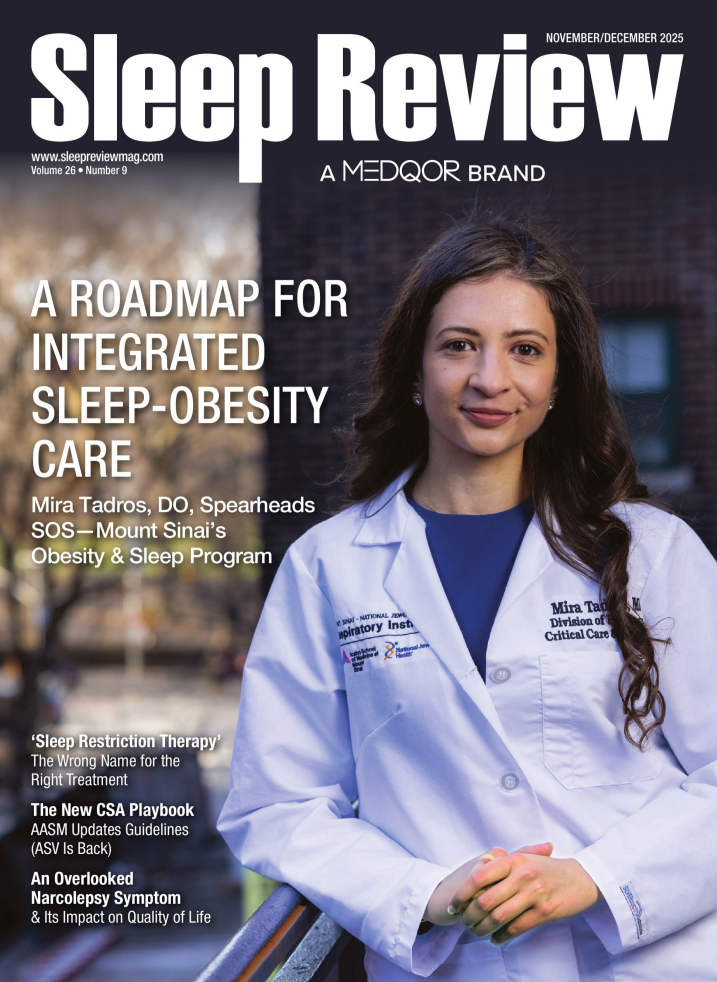
A Roadmap for Integrated Sleep-Obesity Care*
Learning Objectives: Examine the relationship between obesity and sleep disorders and the rationale for integrating care across specialties. Analyze the clinical and operational components required to implement multidisciplinary sleep-obesity programs. Identify strategies sleep practices can use to incorporate weight management and collaborative care into clinical workflows.
How to Treat Central Sleep Apnea in 2025*
Learning Objectives: Describe the updated American Academy of Sleep Medicine clinical practice guideline recommendations for central sleep apnea. Compare therapeutic options for central sleep apnea, including CPAP, adaptive servo-ventilation, bilevel PAP with backup rate, and phrenic nerve stimulation. Analyze the shift toward patient-reported outcomes and individualized care when assessing treatment success.
The Overlooked Narcolepsy Symptom
Learning Objectives: Identify cognitive impairment as a significant and often underrecognized symptom of narcolepsy. Examine how attention, memory, and executive function deficits affect quality of life in individuals with narcolepsy. Discuss the importance of recognizing patient-reported experiences such as “brain fog” in clinical assessment.
Making Pediatric Airway Care Feasible for Dental Practices
Learning Objectives: Identify clinical indicators and screening approaches dentists can use to detect obstructive sleep apnea risk in pediatric patients. Examine interdisciplinary strategies for integrating airway-focused care into general dental practices. Evaluate adjunctive therapies and collaborative treatment models used to manage pediatric sleep-disordered breathing.
The Most Inaccurately Named Insomnia Therapy*
Learning Objectives: Describe the principles and therapeutic goals of sleep restriction therapy within cognitive behavioral therapy for insomnia. Explain why the term “sleep restriction” may misrepresent the clinical intent of the therapy. Analyze the evidence supporting sleep restriction therapy as an effective behavioral treatment for insomnia.
Terms for CSTE Qualification
The Board of Registered Polysomnographic Technologists (BRPT) designates this educational activity for a maximum of 0.5 Continuing Sleep Technology Education (CSTE) credits. Individuals should claim only those credits that he/she actually earned in the educational activity. Certificates are issued on Fridays.
To be awarded Continuing Sleep Technology Education (CSTE) credit, BRPT-credential holders must read the digital edition of Sleep Review and score 80% or higher on the post-test. The participant may re-take the post-test up to 3 times. If unable to achieve a passing score, credit cannot be issued.
Questions/comments: Email [email protected]
* Conflict of Interest: Articles are written by employees of Sleep Review, which accepts sleep marketer advertising