New survey data indicate that CPAP users are heeding warnings about automated CPAP cleaning devices, yet struggle to fully disassemble and manually wash their equipment.
By Sree Roy
Patients are heeding the words of concern from the US Food and Drug Administration (FDA) and CPAP companies about automated CPAP cleaning devices, such as those that use ozone and ultraviolet light, according to new survey data from Sleep Review.
”These machines are not necessary to clean your CPAP. Most CPAP accessories like masks, hoses, and CPAP machine humidifier tanks can be cleaned with mild soap and water as described in the owner’s manual,” the FDA states, adding, “An add-on device does not replace the manufacturer’s recommended cleaning process.” In some cases, CPAP manufacturers have even updated their warranty phrasing to exclude damage caused by automated CPAP cleaners.
However, the survey findings also reveal a concerning underlying trend: while patients are avoiding automated cleaners, their manual cleaning habits are subpar.
Minimal Use of Automated Cleaners
A vast majority of respondents (86%) reported that they have “never” used an automated CPAP cleaning device. 14% said they do not currently use one but have in the past. No one responded that they currently use one.

Patients are acutely aware of the potential financial and mechanical repercussions associated with these products. Over half (57%) of respondents indicated they are “very concerned” that using an ozone or UV cleaner could void their CPAP warranty. The rest (43%) responded that they were not aware that using one could impact a CPAP warranty.

Patient education from durable medical equipment (DME) providers appears to be playing a role. As one survey respondent wrote, “I was told by an employee from CPAP supply company to not use any of the CPAP cleaning machines…that they weren’t good for the machine.”
Subpar Manual Cleaning Habits
While patients are returning to traditional soap-and-water methods, the survey suggests they are doing an incomplete job. Most report focusing their cleaning efforts on the mask—while neglecting the rest of the system.

Over half of the respondents (57%) had washed their CPAP mask within the past 24 hours, which is in line with many mask instructions that state to wash it daily. Another 29% report washing the mask within the past week, while 14% reported that they don’t wash their mask.


Manual cleaning drops precipitously when looking at other components:
- Tubing: In general, tubing should be washed once a week. But respondents were all over the board with their tubing-washing habits. Nearly 29% of respondents admitted they never wash their CPAP tubing. Another 29% had not washed it in over two weeks, while another 29% had washed it within the past week. The remaining 14% reported washing tubing 1 to 2 weeks ago.
- Humidifier Chambers: In general, the humidifier water chamber should be washed once a week. Again, nearly 29% reported that they do not wash the chamber at all. However, other respondents report being in sync with their manuals: having washed it in the past 24 hours (14%), two to three days ago (14%), or within the past week (43%).
- Filters: Reusable filters should typically be washed at least once a week. Among those with reusable filters, 43% stated they do not wash them at all. Another 43% said their CPAPs did not have any filters that are non-disposable. The remaining 14% reported cleaning the filter more than 2 weeks ago.
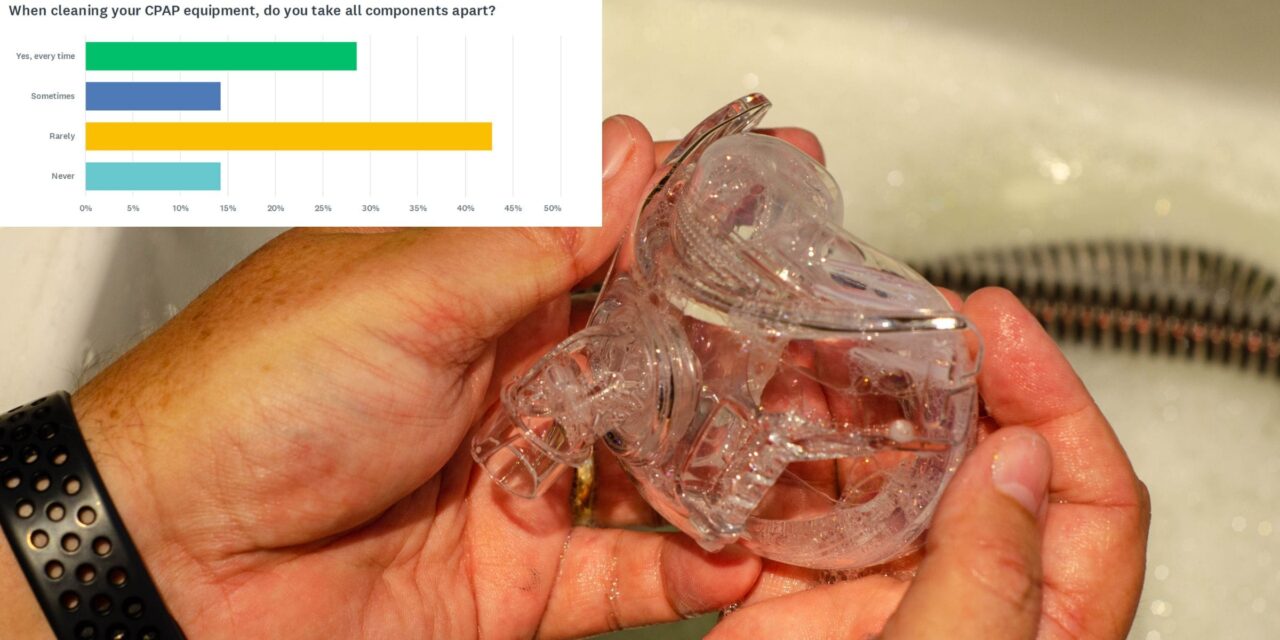
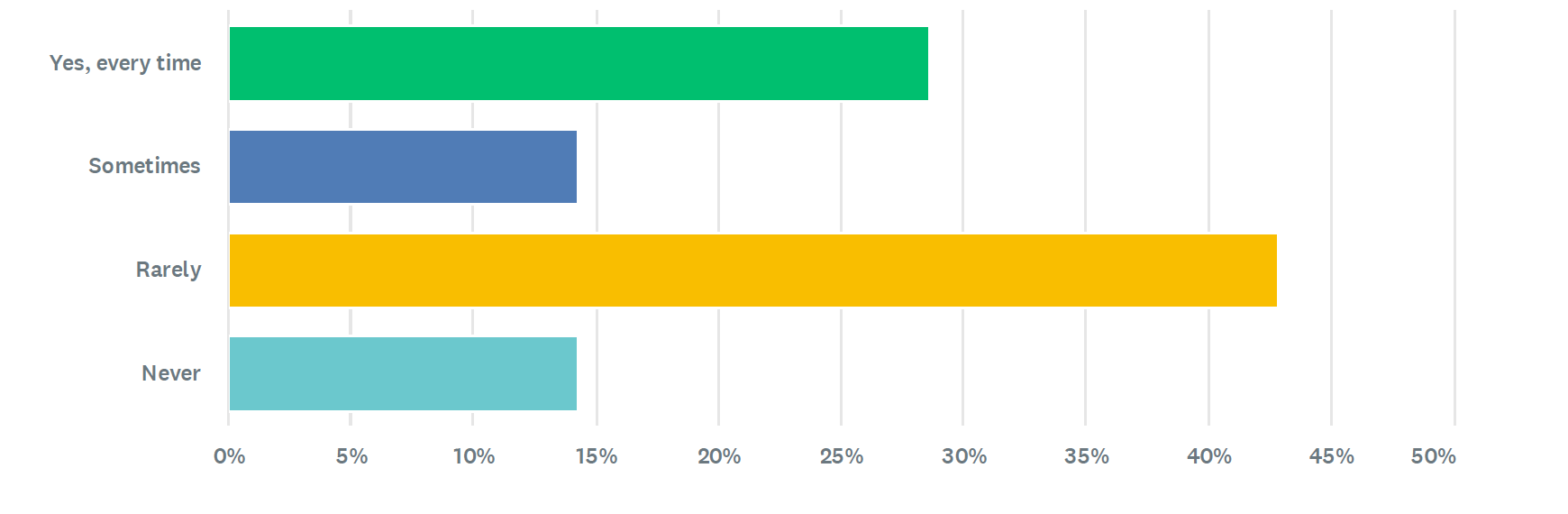
Patients also report failing to properly dismantle their setups for a thorough cleaning. Only 29% of respondents take all components apart “every time” they clean their equipment. The rest do so “sometimes” (14%), “rarely” (43%), or “never” (14%).
Cleaning & Drying Methods
When patients do clean their equipment, methods vary. Respondents cited using CPAP wipes (29%), CPAP-specific soap and water (29%), and alternative solutions like white vinegar and distilled water. For drying, air drying on a towel or rack is the standard practice for 83% of users, with most reporting a drying time of under two hours. Automated CPAP dryers, a category separate from the controversial automated cleaners, are used by about 17% of respondents.
For sleep specialists and equipment providers, these preliminary findings suggest that while the messaging against automated cleaners has been highly effective, there is a renewed need for comprehensive patient education focused on the step-by-step disassembly and manual washing of the entire CPAP system.
More in Peer Pulse Surveys:
ID 160554424 @ Rlanier | Dreamstime.com