This week, the Food and Drug Administration (FDA) issued an update to its 2024 recall notice of Philips BiPAP V30, A30, and A40 ventilators related to the risk for a failure in the ventilator inoperative alarm, which can cause therapy interruption or loss. The recall involves correcting devices and does not involve removing them from where they are used or sold.
The FDA reports three additional injuries related to this recall. In 2024, it reported 10 injuries; it now reports 13. Reported deaths increased by one, from seven in 2024 to eight to date.
What to Do If the Ventilator Inoperative Alarm Occurs
- If interruptions of therapy can be tolerated and the ventilator inoperative alarm occurs, the patient/caregiver will have instructions to remove the patient from the device and to place them on an alternative device.
- If interruptions of therapy cannot be tolerated, the patients and caregivers are instructed to provide alternate ventilation AND contact the equipment supplier for a device alternative.
- According to a March 19, 2024 Philips Respironics notice, as an optional step/action, an attempt to perform a “hard reboot” (forced device restart) that may temporarily restore device function, should be taken.
Reason for Updates to Use Instructions
These devices may:
- reboot intermittently for 5-10 seconds (stopping therapy, blank screen, single audible alert), then restart with the same patient settings.
- reboot intermittently for 5-10 seconds (stopping therapy, blank screen, single audible alert), then restart with factory default settings.
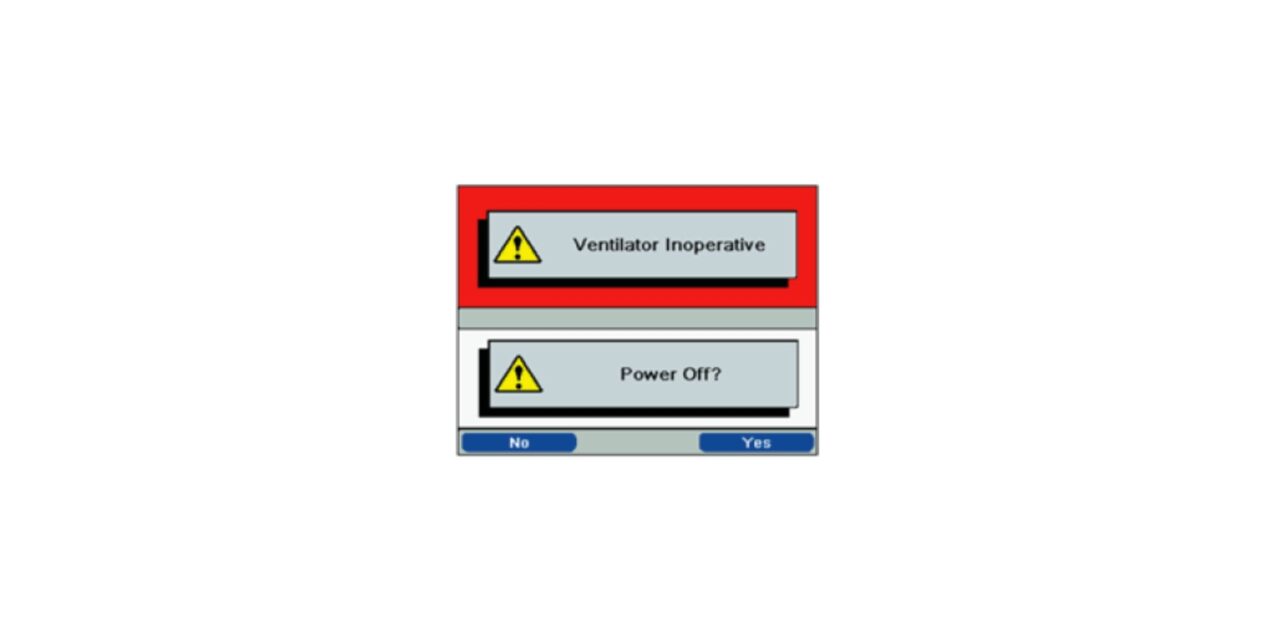
- enter a ventilator inoperative state (therapy stopped, audible and visual alarms present) after three reboots within 24 hours, or without a preceding reboot.
These issues can result in therapy interruption or loss, potentially leading to hypoventilation, hypoxemia, hypercarbia, respiratory failure, or death in vulnerable patients.
Philips Statement
Via email, a Philips spokesperson shared the following statement:
“Philips has intensified efforts to strengthen patient safety and quality across the company. We are methodically working through product quality at all levels and businesses in a multi-year program. We act fast on post market surveillance signals, proactively issuing corrections, updates or recalls when we identify potential issues.
“In 2024, Philips Respironics issued a notice for certain A-Series Ventilator units, due to an issue related to the device Ventilator Inoperative Alarm. This action was previously designated a Class I recall by the FDA at that time.
“In April 2025, the company issued an updated notice for affected units. This updated notice clarified the patient population who cannot tolerate interruptions or loss of therapy and directed this patient group to transition to alternative ventilation, under the guidance of a physician. As indicated in the original notice, affected devices in use with patients who can tolerate therapy changes can continue to be used, or an alternate device will be provided.
Affected products are designed with a Ventilator Inoperative condition, to shut down the unit if a device cannot deliver specified therapy. An audible and visual alarm will alert the patient or caregiver.”