ABM was acquired by Cadence Health Capital last month. A new leadership team at the neurology-forward sleep company plans to streamline operations and expand the clinical reach of validated technologies for sleep apnea, insomnia, and neurodegenerative disease.
By Sree Roy
On May 20, Advanced Brain Monitoring (ABM), a company known within the sleep medicine community for its research-heavy approach to EEG and home sleep testing, was acquired by Cadence Health Capital. The transition primes the Carlsbad, Calif-based firm to move toward a broader commercial strategy aimed at streamlining the clinical utilization of its product suite.
The acquisition brings in a new executive team with backgrounds in healthcare finance, contract research, geriatric primary care, and nutraceuticals. Nikita Sunilkumar, MBA, MS, assumes the role of CEO; Nadia Tarazi, MBA, MA, CPCC, takes over as chief commercial officer; and Rania Missoumi, MBA, MPH, joins as chief financial officer. While the leadership is new, the company’s founders, Dan Levendowski and Chris Berka, remain significant investors and will continue to lead technical and scientific efforts as chief technology officer and chief scientific officer, respectively.
The new leadership team views the company as a “hidden gem” within the sleep industry—one that possesses deep clinical validation but has lacked the operational infrastructure to reach a mass audience. “When I learned about the Sleep Profiler and really understood what it was capable of doing compared to a lab, it felt like when Blockbuster missed the chance to be Netflix,” Tarazi says.
Built on Validation
According to Sunilkumar, the decision to acquire ABM was rooted in the difficulty of replicating the company’s extensive library of research and clinical data and Food and Drug Administration clearances. In an era where new home sleep testing (HST) startups frequently enter the market, the team found that many of these competitors are still navigating the hurdles of validation and regulatory approval that ABM cleared years ago.
“If you wanted to start today, the amount of effort, time, and cost it would take to replicate the amount of science that’s been done—the validation of the actual product with real patients and real nights—it’s an enormous task,” Sunilkumar says. “We don’t have to reinvent the wheel of revalidating or getting FDA clearance. That’s already all done.”
This scientific foundation is largely attributed to the “inventor mindset” of the founders. Products like the Sleep Profiler were developed to capture neurological insights that go beyond the basic requirements of current reimbursement codes. This includes the ability to track REM sleep, slow-wave sleep, and specific biomarkers that are increasingly relevant to the broader medical community, particularly in neurology. ABM also has expertise in waking EEG and event-related potentials applications and serves research and clinical trials customers as a contract research partner.
Streamlining the Experience
For the near term, the new leadership is focused on “removing friction” for the clinicians who already use ABM products. Sunilkumar notes that while the technology is well-regarded by key opinion leaders, the operational burden of deploying devices can limit a practice’s ability to scale.
The company plans to introduce tools to simplify the prescription and deployment process. “If you have an application that you’ve perfected as a clinician, we want to let you do that and take away the non-medical things that are taking up your time,” Sunilkumar says. “That’s going to be our focus for the near term.”
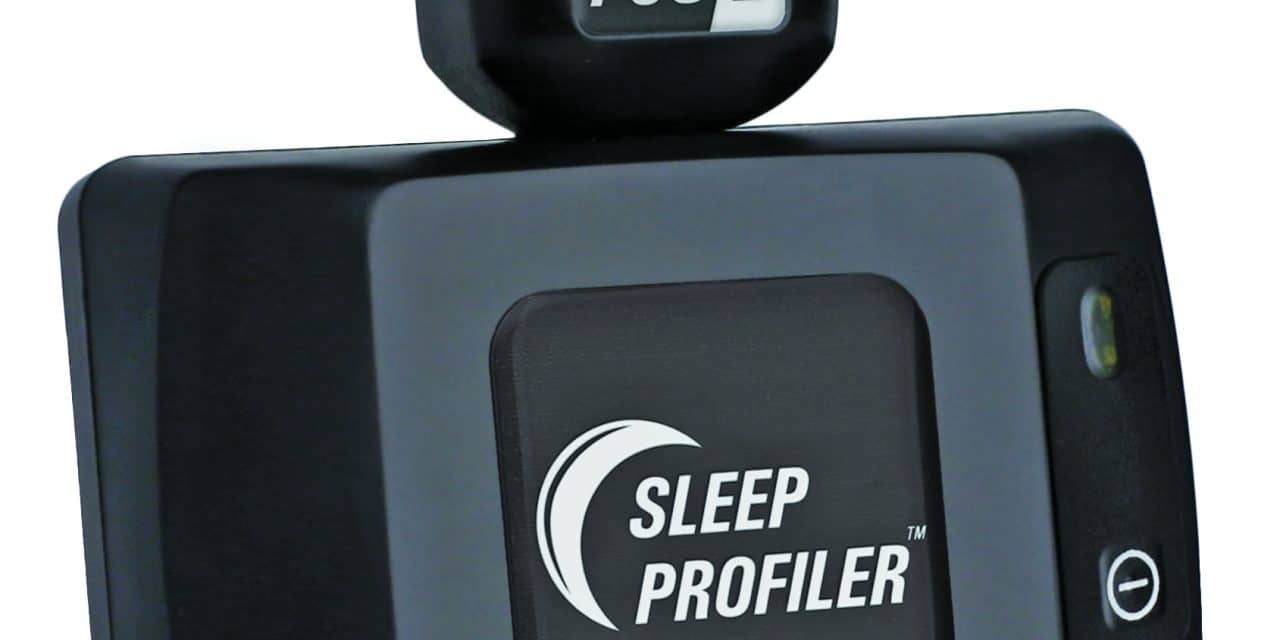
This streamlining also extends to the product lineup itself. Historically, the Sleep Profiler was marketed as three distinct products: the Sleep Profiler, Sleep Profiler PSG, and Sleep Profiler NDD (neurodegenerative disease). The new team realized these were essentially the same modular hardware with different configurations. By consolidating these into a single, configurable platform, they aim to make the technology more adaptable to different clinical needs and reimbursement environments.
While the Sleep Profiler is Advanced Brain Monitoring’s flagship sleep diagnostic tool, the acquisition also brings renewed attention to Night Shift, a positional obstructive sleep apnea therapy device. The device’s potential in the United States, despite strong sales in Europe, remains largely untapped, according to the new executive team. Strategic partnerships will be in focus to help expand patient access.
The Neurology Frontier
In the longer term, ABM plans to leverage its sleep data to serve the broader neurology community, particularly those treating geriatric patients and neurodegenerative diseases. Sleep is increasingly recognized as a pillar of brain health, and the biomarkers captured during sleep can potentially serve as early indicators for conditions like Alzheimer’s and Parkinson’s disease.
For more than a decade, Advanced Brain Monitoring has led efforts such as the National Institutes of Health-funded INSPECDS study, pioneering the use of combined sleep and wake EEG biomarkers to improve the early detection and classification of Alzheimer’s disease and related dementias.
However, the team acknowledges that a neurologist’s workflow differs significantly from a sleep physician’s. To reach this audience, ABM is working on simplifying the reporting process so that complex neurological data is presented in a way that is actionable for a non-sleep specialist.
Maintaining the Founders’ Vision
While the new leadership brings a commercial focus, they are careful to maintain the scientific integrity established by Levendowski and Berka. The founders’ continued involvement is intended to ensure that the inventor mindset remains part of the company’s DNA.
“Part of the secret sauce of ABM is that this product was developed with that research mindset,” Tarazi says. “Some of the parameters that it covers aren’t just aligned for a reimbursement code; they come from that curious focus.”
Flexible Investment Model
Unlike many healthcare acquisitions driven by large private equity firms, ABM was acquired by a syndicate of individual and institutional investors. “We’re able to come in and be flexible about where we see the opportunity and how we want to grow,” Sunilkumar says.
As the company transitions, the message to the sleep community is one of continuity paired with increased support. The “little engine that could” is now looking to scale its validated science into a more accessible clinical reality.
“There are people who use and love Sleep Profiler today,” Sunilkumar says. “We don’t want to reinvent the wheel. Things are already working. We just want to find the next generation of people for whom we could deliver good science and good clinical outcomes.”